










TAIPEI (TVBS News) — Taipei Mayor Chiang Wan-an (蔣萬安) issued a stark warning on Monday (April 7) about the looming economic threat posed by the recent wave of punitive tariffs imposed by U.S. President Donald Trump. In a somber assessment that underscored the gravity of the situation, Chiang projected that the tariffs could slash Taiwan's gross domestic product by a substantial 3.8%, a figure that would represent one of the most significant economic contractions for the export-dependent island in recent memory. The mayor emphasized that the situation demands unprecedented national unity, asserting that Taiwan "cannot afford internal strife during this national crisis."
In his detailed assessment of the crisis, Chiang highlighted the severity of the 32% tariff rate now facing Taiwanese exports to its largest market, a figure that threatens to upend the island's trade-reliant economic model. The mayor urged Taiwan's central government to prioritize negotiations for regional fair competition conditions, with particular emphasis on including the strategically vital semiconductor and pharmaceutical sectors in any talks with Washington. Looking inward, he called for a comprehensive reassessment of major public infrastructure and spending projects planned for the next two years, while simultaneously announcing the creation of a new platform designed to gather input directly from business leaders affected by the tariffs. When questioned about his response to President Lai Ching-te's (賴清德) recently announced five-point strategy for addressing the crisis, Chiang diplomatically expressed hope that the administration would successfully secure the most favorable conditions possible for Taiwan, emphasizing the importance of ensuring the island is not sidelined in critical international trade negotiations.
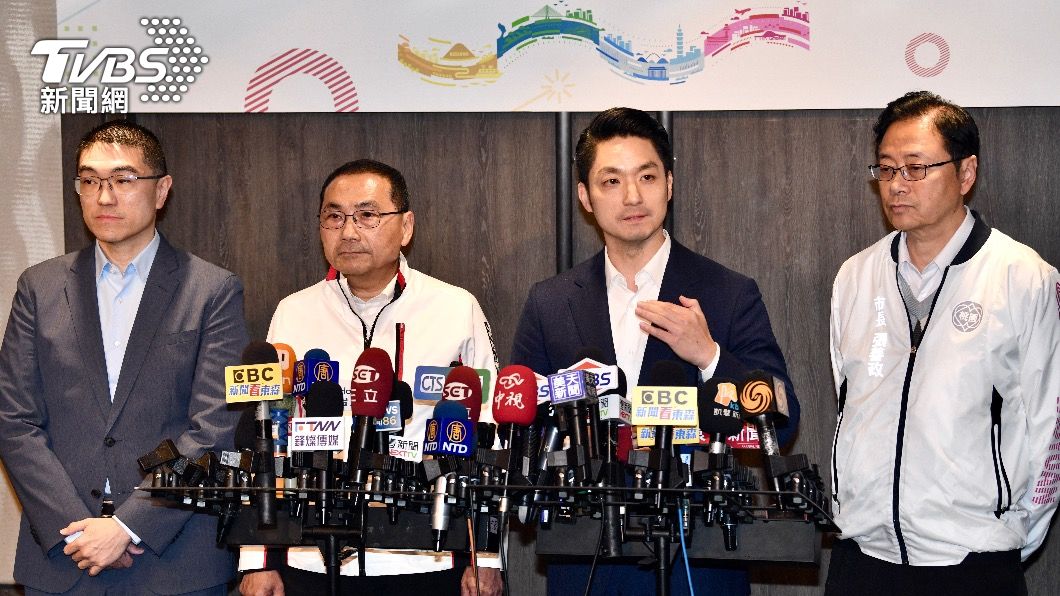
Meanwhile, the economic anxiety has already manifested in Taiwan's financial markets, with the Taiwan Stock Exchange experiencing what Chiang characterized as the most significant blow in market history, as investors grapple with the potential long-term implications of the tariffs. The mayor emphasized that restoring public confidence amid the market turbulence must be a priority for the central government, alongside securing favorable terms in what promise to be challenging negotiations with U.S. trade representatives. Taking a regional approach to the crisis, Chiang announced plans for a coordinated response across Taiwan's densely populated northern economic corridor, calling for an urgent meeting with the mayors of neighboring Keelung (基隆), New Taipei (新北), and Taoyuan (桃園) to assess the tariffs' potential impact on industries concentrated in the capital region. This proposed gathering, he explained, would serve as a platform to collect and synthesize business and public opinions before presenting unified recommendations to the central government.
By fostering collaborative approaches across municipal boundaries, Chiang suggested that local governments could play a crucial role in mitigating the tariffs' impact despite international trade policy traditionally falling under central government jurisdiction. The mayor outlined a four-pronged approach through which city administrations could respond to the crisis: conducting a comprehensive inventory of available policy tools and resources, implementing enhanced monitoring of consumer prices to prevent economic hardship from cascading to households, providing targeted assistance for industries requiring transformation or diversification in response to the new trade reality, and facilitating ongoing cross-city discussions to ensure coordinated regional responses. This locally-driven strategy, Chiang implied, could complement national efforts while providing more nimble and targeted interventions for affected businesses.