










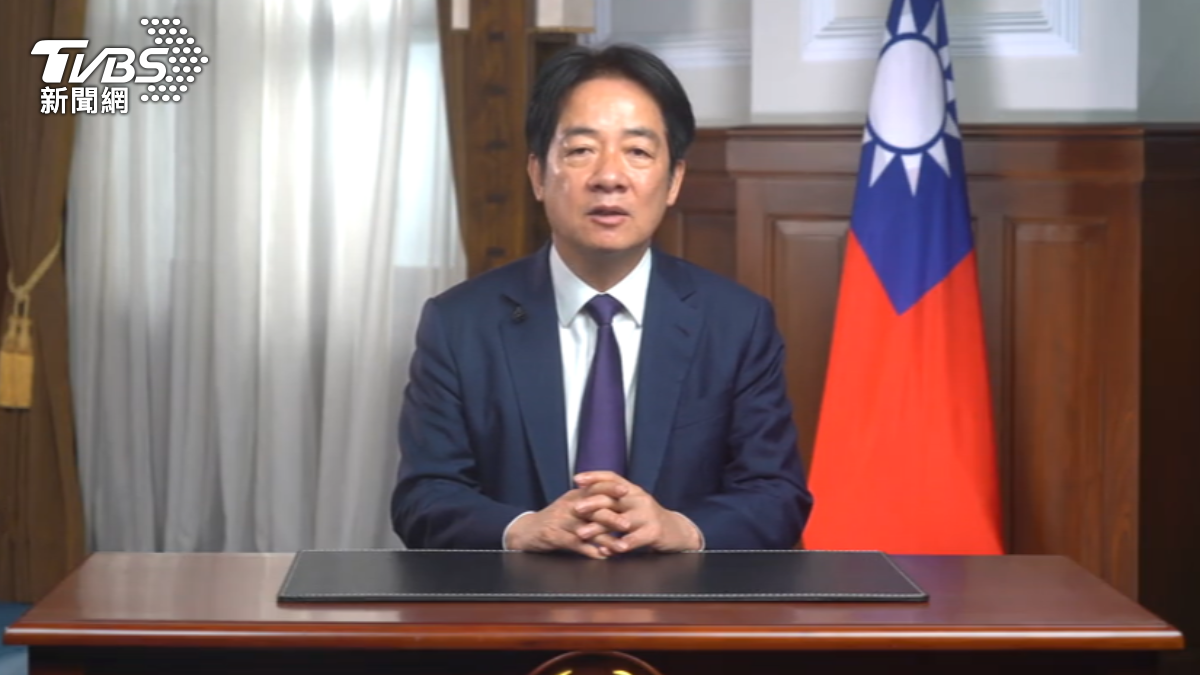
TAIPEI (TVBS News) — A senior media figure has endorsed President Lai Ching-te's (賴清德) approach to U.S. President Donald Trump's reciprocal tariff policy, calling it "the most reasonable and stable method" to address the potential economic impact. Speaking on Monday (April 7), Akio Yaita, a Japanese journalist now based in Taiwan, expressed support for the five strategic responses outlined by Taiwan's leadership to counter the tariff threat that has rattled the island's export-dependent economy.
Yaita expressed confidence that Taiwan can minimize economic damage through a well-timed and measured response to the tariff challenge. He contextualized the situation by pointing out that Trump's tariff policy targets numerous countries globally, not Taiwan exclusively. Drawing an accessible analogy, he likened Taiwan's position to that of a shopkeeper confronted with price reduction demands from a major client — a difficult but navigable business challenge rather than an insurmountable crisis.
In his public statement on Facebook, Yaita explicitly advised against severing economic ties with the United States or responding with diplomatic anger — approaches he clearly viewed as counterproductive. Instead, he outlined several pragmatic alternatives: Taiwan could strategically lower product prices, significantly enhance after-sales service quality, or substantially increase imports from the United States to maintain positive bilateral relations. Beyond mere crisis management, Yaita framed the tariff challenge as a potential catalyst for positive change, emphasizing that this situation presents Taiwan with a valuable opportunity to upgrade its industrial base and enhance its global competitiveness.
On Sunday (April 6), President Lai unveiled his administration's strategic approach to the tariff situation, which includes initiating formal negotiations with the United States by proposing a framework similar to the U.S.-Mexico-Canada Agreement. Lai's plan emphasizes beginning these discussions with an ambitious "zero tariff" proposal between Taiwan and the United States, potentially opening a path toward comprehensive trade liberalization rather than retaliatory measures.