








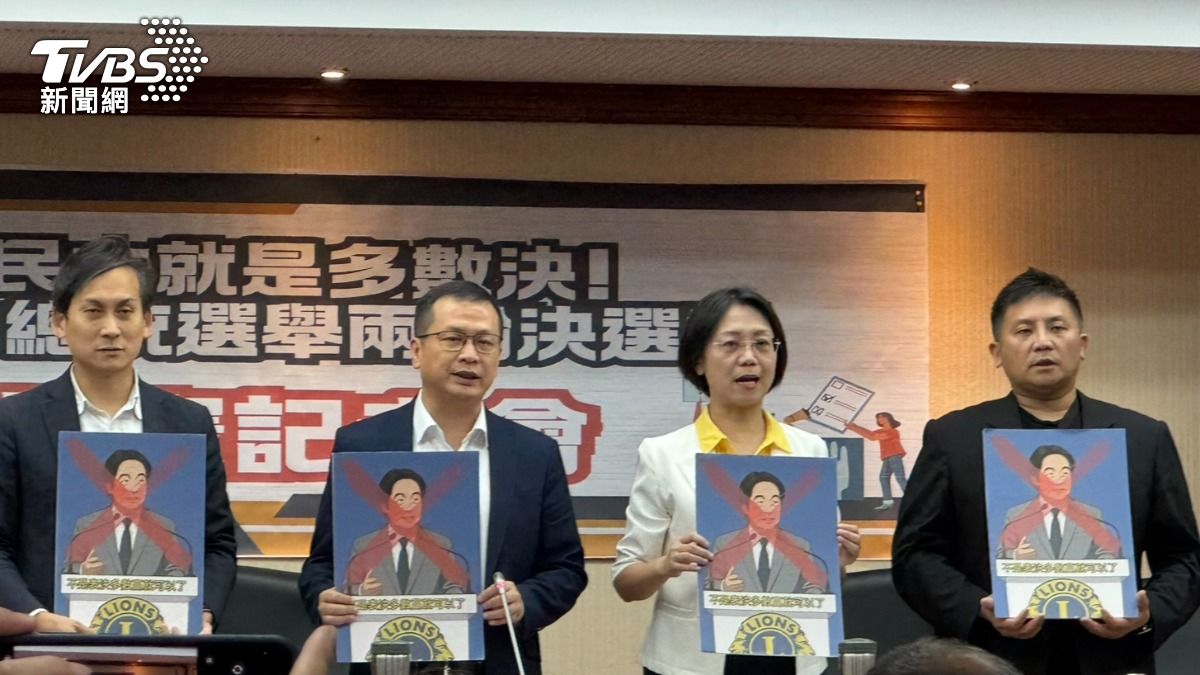
TAIPEI (TVBS News) — Four Kuomintang (KMT, 國民黨) legislators unveiled a proposal Wednesday (Sept. 17) to overhaul Taiwan's presidential election system, advocating for a two-round majority voting mechanism that would fundamentally reshape the island's democratic process. Lo Chih-chiang (羅智強), Yeh Yuan-chih (葉元之), Weng Hsiao-ling (翁曉玲), and Wu Tsung-hsien (吳宗憲) spearheaded the initiative, arguing that Taiwan's current plurality system undermines democratic legitimacy. The proposal represents a significant challenge to Taiwan's existing electoral framework established since direct presidential elections began.
Lo contended that Taiwan's current plurality system frequently constrains voters from backing their genuine preferred candidates, creating artificial electoral limitations. The legislator emphasized that presidential power requires absolute majority validation to ensure democratic legitimacy and minimize governmental polarization across Taiwan's political spectrum. Lo specifically criticized President Lai Ching-te (賴清德) for what he characterized as undemocratic actions that contradict majority public opinion and undermine consensual governance.
Lo acknowledged the proposal remains in preliminary stages without formal prioritization from the KMT caucus, Taiwan's main opposition party. He revealed that most KMT legislators endorse the electoral reform while ongoing discussions with Taiwan People's Party (TPP, 民眾黨) lawmakers aim to forge broader legislative consensus. The cross-party dialogue suggests potential bipartisan support for restructuring Taiwan's presidential election system beyond traditional party lines.
Weng highlighted that over 70% of the 40 countries conducting direct presidential elections employ two-round systems, positioning Taiwan as an international outlier. She warned that Taiwan's current system enabling presidents to govern without majority mandates creates inherent governance challenges and democratic deficits. Yeh complemented this argument by asserting that absolute majority requirements would foster political moderation and national unity while reducing Taiwan's persistent societal divisions.