










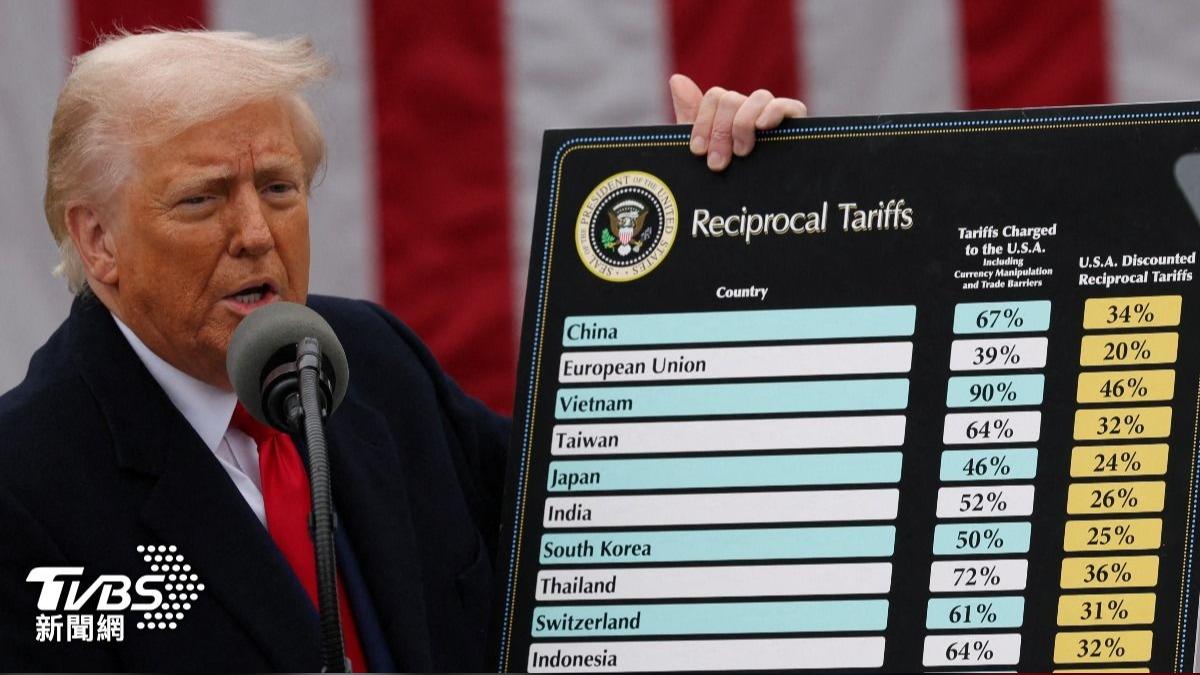
TAIPEI (TVBS News) — The newly implemented reciprocal tariffs by the United States (美國) could shave off 2.5 percentage points from Taiwan's economic growth, according to DBS Bank (星展集團) senior economist Ma Tieying (馬鐵英). During a Wednesday (April 9) economic briefing, Ma highlighted Taiwan's significant economic exposure, noting that exports to the U.S. accounted for 14% of the island's GDP last year. The economist pointed out that Taiwan has not announced plans for retaliatory tariffs against American imports, a restraint that might actually benefit domestic consumers by potentially lowering the consumer price index.
Despite these tariff concerns, DBS Bank has maintained its economic growth forecasts for Taiwan at 3.5% for this year and 2.4% for next year. Ma's detailed analysis, using a price elasticity of 0.5, indicates that the direct impact of these reciprocal tariffs would account for approximately 1.7 percentage points of the total GDP effect. The economist emphasized that Taiwan now faces a substantial 32% reciprocal tariff rate, which ranks second in severity across Asia, exceeded only by Vietnam's (越南) 46% rate and significantly higher than the regional average. She attributed this unusually punitive tax rate to the U.S. methodology of using bilateral trade deficits as the sole determining factor. Computer parts, including advanced AI servers, constitute Taiwan's most valuable export to the U.S., generating US$32.9 billion (NT$1.09 trillion) annually and commanding 32.7% of America's import market for these critical components.
Addressing Taiwan's vital high-tech sector, Ma noted that while semiconductors currently remain outside the scope of these tariffs, they could still experience significant indirect effects from declining downstream demand as tariffs impact finished products. The economist pointed out that Taiwan's other key exports to the U.S., including electrical equipment and industrial machinery, maintain a relatively modest market share of approximately 2% to 3% and already face intense competitive pressures. Ma drew an important distinction in vulnerability patterns, emphasizing that traditional industries would likely bear the immediate brunt of direct tariff impacts, while Taiwan's crucial Information and Communications Technology (ICT) sector faces greater exposure to broader global economic fluctuations triggered by the trade tensions.