










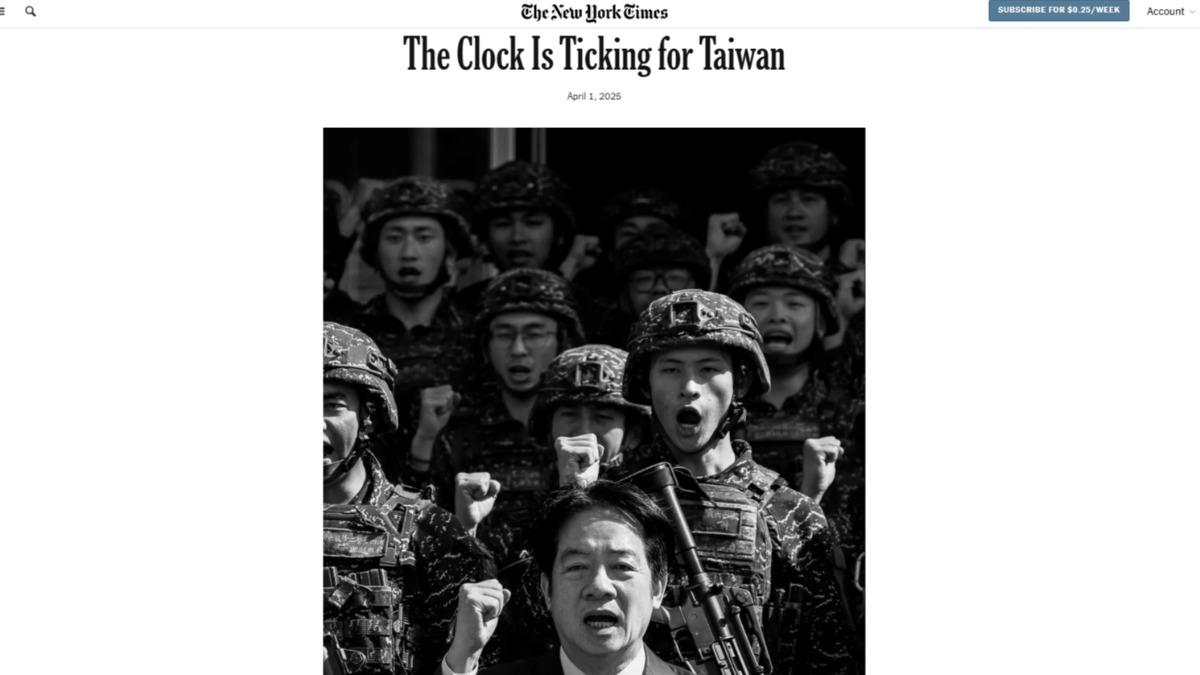
TAIPEI (TVBS News) — Taiwan must reconsider its diplomatic strategy and avoid excessive dependence on American protection, warned former culture minister Lung Ying-tai (龍應台) in a pointed critique issued Tuesday (April 1). The respected intellectual and former government official drew troubling parallels between Taiwan's current geopolitical position and Ukraine's vulnerability, specifically referencing U.S. President Donald Trump's approach to the Eastern European nation. In her assessment, Taiwan risks operating under a dangerous "false sense of security" if it continues to place undue faith in American commitments to the island democracy.
Lung's concerns were articulated in a guest essay published in The New York Times under the ominous title "The clock is ticking for Taiwan." Within this prominent international platform, she directly challenged President Lai Ching-te's (賴清德) recent rhetoric, particularly his March 13 characterization of China as a "hostile external force." Such language, according to Lung, evokes divisive Cold War mentalities and cultivates an atmosphere of fear and confrontation rather than fostering the essential national dialogue needed to address Taiwan's complex relationship with its powerful neighbor and uncertain future.
To reinforce her argument, Lung referenced significant historical precedents that challenge Taiwan's faith in unwavering American support. She highlighted President Jimmy Carter's momentous 1978 decision to sever diplomatic relations with Taiwan — a unilateral action taken without congressional approval that prioritized broader American strategic interests. Drawing a direct line to contemporary politics, Lung suggested that President Trump's diplomatic approach reflects a similar America-first mindset, raising profound questions about whether the United States would genuinely commit to Taiwan's protection in a crisis scenario.
The central thesis of Lung's essay emphasized the critical need for Taiwan to initiate substantive internal discussions regarding peaceful coexistence with China rather than perpetuating confrontational policies. With the measured perspective of a cultural figure who has operated at the highest levels of government, she cautioned against allowing Taiwan's destiny to be determined primarily by external powers and their shifting geopolitical calculations. Her assessment presented a stark conclusion: Taiwan's current dual approach of maintaining confrontation with Beijing while placing complete faith in American protection has become increasingly untenable in the evolving global landscape.