










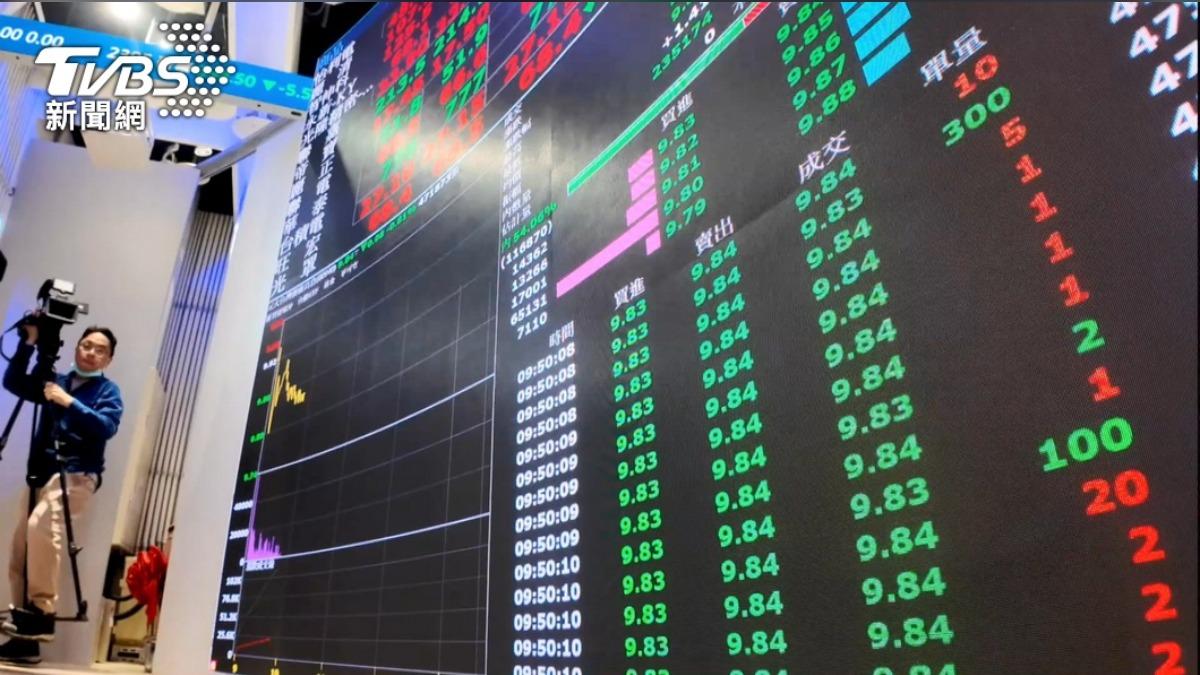
TAIPEI (TVBS News) — Taiwan's stock market surged in early trading Monday (March 24), as the benchmark index climbed 139.28 points to reach 22,348.38, briefly touching a high of 22,380.73. Taiwan Semiconductor Manufacturing Company (TSMC, 台積電) spearheaded the rally, opening at NT$986 (around US$29.88), marking a NT$14 (approximately US$0.42) increase from its previous close. The chipmaker's strong performance alone contributed about 112 points to the broader market's upward momentum, highlighting its outsized influence on Taiwan's financial landscape.
Other technology heavyweights joined the upward trend, with Hon Hai (鴻海), MediaTek (聯發科), Aspeed Technology (信驊), and Largan Precision (大立光) all posting gains that propelled the electronics sector index nearly 1% higher. While tech stocks rallied, traditional industries displayed inconsistent performance, creating a two-tiered market dynamic. Market analysts are urging investors to proceed with caution amid heightened volatility, recommending defensive positions in low-risk equities and dividend-focused investments. Experts anticipate the index will trade within a range of 21,500 to 22,500 points as market participants navigate current uncertainties.
TSMC's market capitalization has reached an impressive NT$25.56 trillion (approximately US$774.5 billion), despite its American Depositary Receipts (ADR) experiencing a 0.42% decline in recent trading. The global market context appears supportive, with U.S. futures indicating a positive opening on Wall Street. By 8 a.m. Taiwan time, S&P 500 futures had advanced 0.6%, recovering from Friday's significant pullback. Similarly, Dow Jones futures gained 0.5%, while technology-heavy Nasdaq 100 futures showed the strongest performance with a 0.7% increase, suggesting continued investor confidence in the tech sector.
NVIDIA's GTC conference continues to cast a long shadow over technology markets, driving interest in artificial intelligence, robotics, autonomous vehicles, and drone-related stocks. However, investors should note that sector rotation has been particularly rapid, requiring nimble positioning to capture emerging opportunities. Market participants remain vigilant regarding former President Trump's proposed tariff policies and their potential effects on U.S. consumer prices and global trade relations. Analysts predict market adjustments in the coming months as economic data emerges and policy directions become clearer, with particular attention to how Taiwan's export-dependent economy might navigate these shifting global currents.