








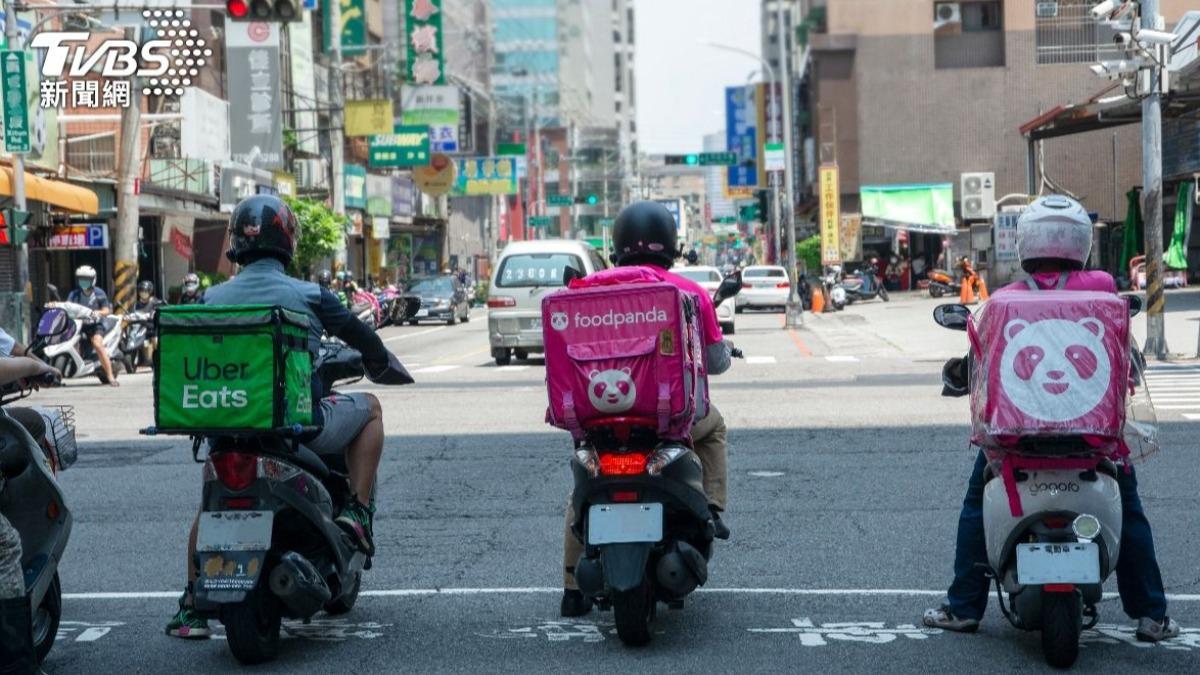
TAIPEI (TVBS News) — The Democratic Progressive Party (民進黨), Taiwan's ruling party, unveiled comprehensive draft legislation Tuesday (Oct. 21) targeting enhanced rights for delivery workers amid declining wages. The proposal establishes dual protection through delivery fee and minimum wage guarantees while preventing arbitrary contract terminations by digital platforms. The 25-article draft law addresses growing concerns over worker exploitation in Taiwan's expanding gig economy.
During a press conference, Su Po-hao (蘇柏豪), the spokesperson for the National Delivery Industrial Union (全國外送產業工會), urged cross-party collaboration to protect delivery workers' rights. He emphasized the disparity between the annual rise in the basic wage and the yearly decline in delivery workers' salaries. Meanwhile, Cheng Li-jia, head of the Taipei Internet Platform Delivery Workers' Union (台北市網路平台外送員職業工會), highlighted that the Ministry of Transportation and Communications' delivery charges and the minimum wage would serve as the baseline guarantees. ++++++++
Su Po-hao (蘇柏豪), spokesperson for the National Delivery Industrial Union (全國外送產業工會), urged cross-party legislative cooperation to protect worker rights during the announcement. He emphasized the stark disparity between annual basic wage increases and yearly delivery worker salary declines. Cheng Li-jia from the Taipei Internet Platform Delivery Workers' Union (台北市網路平台外送員職業工會) confirmed Ministry of Transportation delivery charges and minimum wage would establish baseline guarantees.
Rosalia Wu (吳思瑤), executive director of the Democratic Progressive Party's policy committee, detailed the legislation's 25 articles featuring 10 key worker protections. The comprehensive proposal establishes grievance channels for delivery workers and external expert handling groups. Digital delivery platforms must bear occupational accident insurance premium costs under the proposed regulatory framework.
Yun Fan (范雲), deputy secretary-general of the party caucus, emphasized the draft legislation transcends previous employment status limitations for delivery workers. The proposal ensures flexibility and safety in labor conditions while moving beyond traditional employment or contractor relationship constraints. This regulatory innovation addresses the evolving nature of gig economy work arrangements in Taiwan's digital marketplace. ◼