








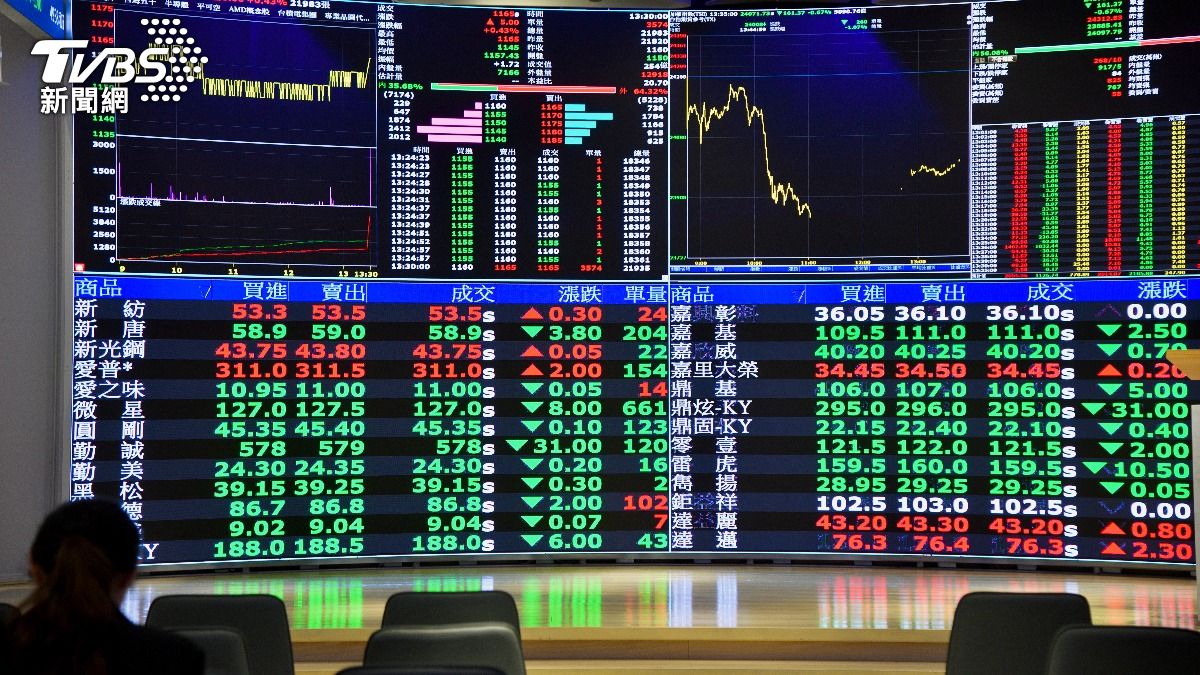
TAIPEI (TVBS News) — Taiwan's stock market posted solid gains Wednesday (Sept. 3) as the benchmark index climbed 83.52 points to close at 24,100.3 points, driven by mixed but generally positive movements across technology and financial sectors. The trading session generated NT$365.704 billion (around US$11.9 billion) in total transaction value, reflecting robust investor activity despite ongoing market uncertainties. Key stocks displayed varied performance patterns as traders navigated evolving market conditions and regulatory developments affecting major technology companies.
Taiwan futures for September closed at 23,997 points, gaining 25 points with substantial trading volume reaching 57,808 contracts throughout the session. October futures contracts similarly advanced, closing at 24,000 points with a 34-point increase and 612 contracts changing hands during trading. These positive movements suggest a cautiously optimistic outlook among professional traders as they carefully navigate Taiwan's evolving market landscape and assess future economic conditions.
The U.S. decision to revoke the VEU exemption for Taiwan Semiconductor Manufacturing Company (TSMC, 台積電) operations in Nanjing failed to impact the chipmaker's stock price, which remained stable at NT$1,160 (around US$37.8). This resilience demonstrates investor confidence in TSMC's ability to navigate regulatory challenges affecting its mainland China operations. Hon Hai Precision Industry (鴻海), also known as Foxconn, gained 1.01% to NT$200.5 (around US$6.5), while MediaTek (聯發科) surged 2.57% to NT$1,395 (around US$45.4).
Taiwan's electronics sector gained 0.38% overall, while the financial sector experienced a marginal decline of 0.06% amid cautious banking sentiment. The computer and peripheral equipment sector, propelled by artificial intelligence-related stocks, posted a modest but encouraging 0.46% increase during the session. The over-the-counter (OTC) index outperformed the main board, climbing 1.12% as smaller technology companies attracted investor interest, though high-priced stocks displayed mixed trading patterns.