










TAIPEI (TVBS News) — Taiwan's top financial regulator sought to calm investor fears amid recent market turbulence triggered by U.S. trade policies. The Financial Supervisory Commission (FSC, 金融監督管理委員會), Taiwan's primary financial regulatory body, Chairperson firmly rejected claims Thursday (April 10) that Taiwan had entered bear market territory, insisting the financial system faces no systemic risks. The statement came as U.S. President Donald Trump announced a 90-day suspension of planned tariffs that were initially set between 11% and 50%, implementing a lower 10% reciprocal tariff during this three-month period.
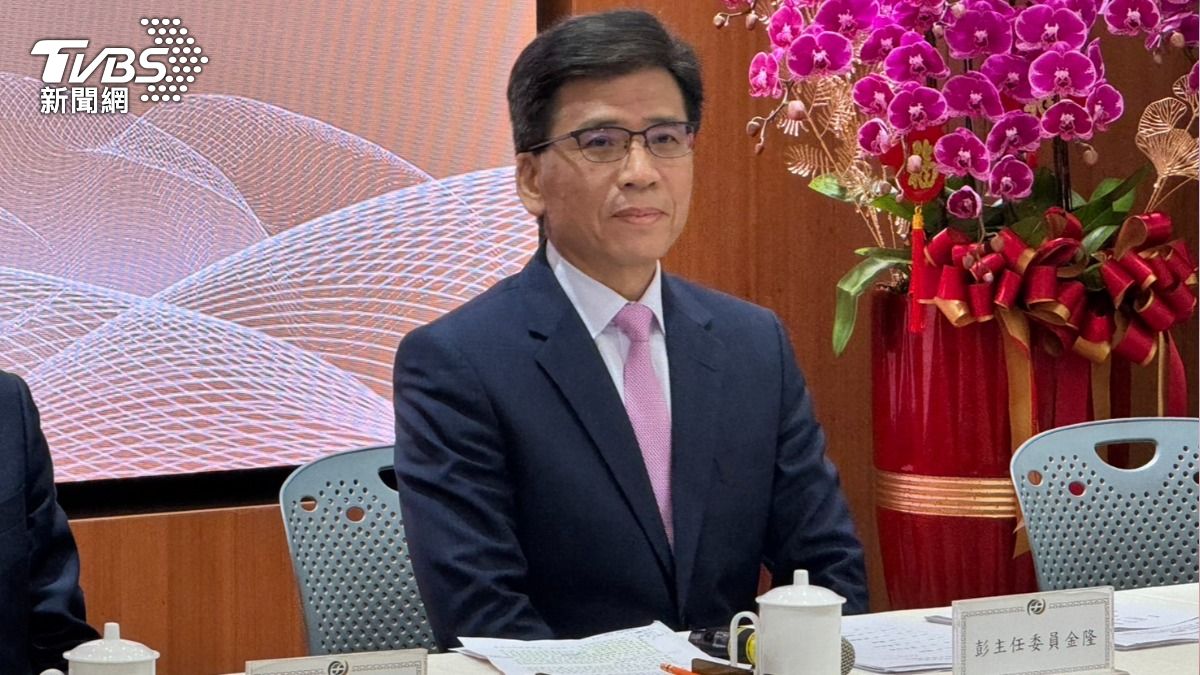
Taiwan's parliament, known as the Legislative Yuan, convened its Finance Committee (立法院財政委員會) to assess how these tariff policies might affect Taiwan's financial markets, economic outlook, inflation rates, and real estate sector. During the session, FSC Chairperson Peng Jin-lung (彭金隆) offered technical reassurance to legislators, noting that despite recent volatility, the market's three-day decline falls short of the academic definition of a bear market. Peng maintained a cautious stance, emphasizing that the regulatory body would refrain from speculating about future market directions.
Addressing concerns raised by opposition Kuomintang (KMT, 國民黨), Taiwan's main conservative political party, Legislator Lai Shyh-bao (賴士葆) regarding retail investors facing potential margin calls, Peng reassured legislators that market authorities are vigilantly monitoring trading activities. The FSC chief revealed demographic insights into the current market situation, noting that roughly 70% of affected investors fall between 40 and 69 years of age. Despite these concerns, Peng emphasized that the overall number of affected accounts remains within manageable parameters and presents no systemic risk to Taiwan's financial stability.
Legislator Kuo Kuo-wen (郭國文) from the ruling Democratic Progressive Party (DPP, 民進黨), Taiwan's current governing party with a traditionally pro-independence stance, pressed for details regarding potential extensions to the FSC's market stabilization measures scheduled to expire Friday. The inquiry highlighted growing political attention to market interventions amid global trade tensions. Taking international developments into consideration, particularly the evolving U.S. tariff situation, Peng disclosed that the regulatory body would make an official announcement regarding any policy adjustments by Saturday afternoon.