








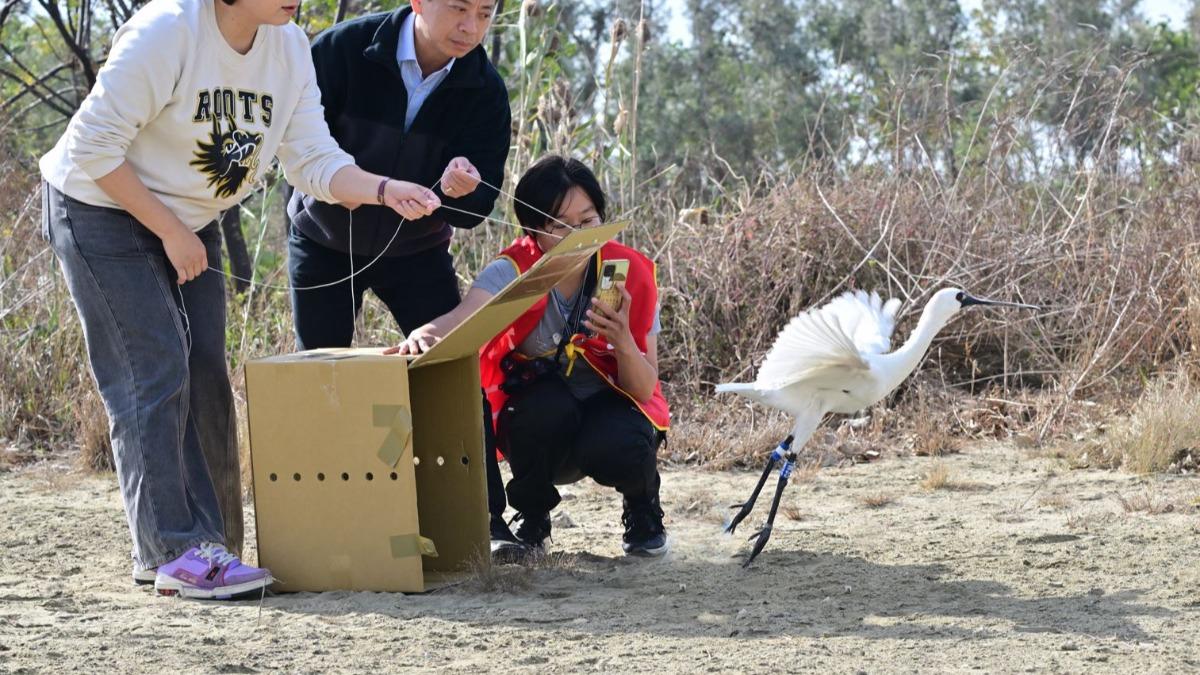
TAIPEI (TVBS News) — Authorities in Chiayi County successfully released a rehabilitated black-faced spoonbill back into the wild on Friday (Jan. 16). The bird, which had been treated for botulinum toxin poisoning, marks a significant conservation victory for the endangered species. It was released following treatment, beginning on Dec. 28, when the Agriculture Department (嘉義縣農業處) received a report of a black-faced spoonbill found incapacitated at the Budai Salt Pan Wetlands (布袋五區鹽田).
According to a press release, the bird exhibited abnormal symptoms and was unable to fly, prompting immediate action from wildlife rescuers. The Agriculture Department activated its wildlife rescue response mechanism, collaborating with the Kaohsiung Wild Bird Society (高雄市野鳥學會), Tainan Wild Bird Society (台南市野鳥學會), and Taiwan Black-Faced Spoonbill Conservation Association (台灣黑面琵鷺保育學會). They transported the bird to the Ministry of Agriculture's Biodiversity Research Institute's Wildlife Rescue Station for urgent care.
Veterinarians diagnosed the bird with botulinum toxin poisoning. Through intensive treatment, it gradually regained its health and ability to fly. The Agriculture Department explained that botulinum bacteria thrive in high-temperature, oxygen-poor environments, such as those found in decaying fish and shrimp, which may have led to the spoonbill's poisoning from contaminated prey.
The black-faced spoonbill is listed as vulnerable on the International Union for Conservation of Nature's (IUCN) Red List of Threatened Species. Chiayi County's Budai and Dongshi (東石) coastal wetlands rank among its top three global wintering sites. Recent surveys show that Chiayi County hosts a stable wintering population of over 2,000 black-faced spoonbills, accounting for one-third of the global population.