








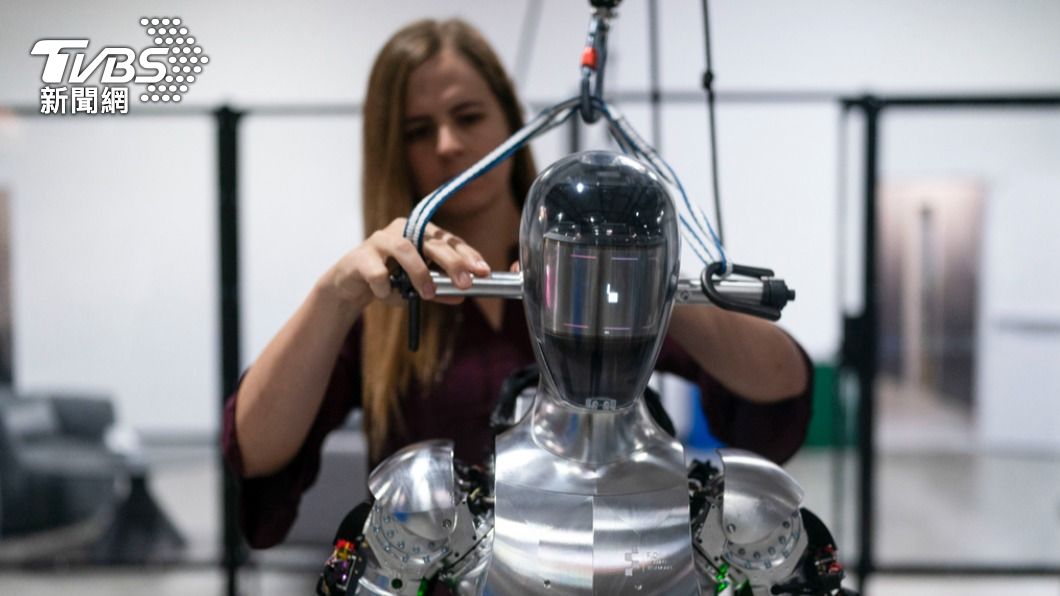
TAIPEI (TVBS News) — Taiwan Semiconductor Manufacturing Company (台積電), the world's largest contract chipmaker and a crucial supplier for global technology giants, saw its Chairman C. C. Wei (魏哲家) make a striking market prediction during a corporate presentation on Thursday (July 17). Wei revealed that TSMC's major customers have expressed remarkable optimism about the emerging humanoid robot sector, forecasting that this nascent market could potentially grow to ten times the size of the already substantial electric vehicle industry. The executive's forward-looking assessment has triggered immediate ripple effects across Taiwan's technology stock market as investors rushed to position themselves in companies connected to robotics and automation.
The semiconductor executive highlighted the continuing robust demand for chips powering artificial intelligence (AI) applications and high-performance computing systems, projecting that these sectors will significantly boost TSMC's third-quarter performance and overall annual revenue measured in U.S. dollars. Wei balanced his optimistic market assessment with a pragmatic caveat, however, noting that despite the extraordinary long-term potential of humanoid robots, their extreme technical complexity and substantial development challenges mean they likely won't emerge as major revenue generators for the semiconductor industry within the current or upcoming fiscal year.
The market reaction to Wei's forward-looking statements was swift and dramatic across Taiwan's technology sector, particularly among companies positioned in the robotics supply chain. Aurotek Corporation (和椿) and Ace Pillar Company (羅昇), two firms specializing in industrial automation components, saw their share prices immediately rocket to their daily trading limits, reaching NT$110 (approximately US$3.74) and NT$102.5 (approximately US$3.49) respectively. Meanwhile, precision motion control specialist Hiwin Mikrosystem Corporation (大銀微系統) experienced a substantial 7.46% price jump, with shares climbing to NT$122.5 (approximately US$4.17) by session's end.
Industry analysts note that creating commercially viable humanoid robots presents extraordinary technical challenges requiring massive datasets to train artificial intelligence systems capable of responding appropriately to unpredictable real-world environments. Engineers must also solve complex mechanical problems related to bipedal locomotion and dexterous hand movements that mimic human capabilities. Despite these hurdles, successful development could revolutionize multiple sectors including manufacturing facilities, warehouse operations, logistics networks, healthcare services, and domestic assistance applications. ◼ (At time of reporting, US$1 equals approximately NT$29.371)