










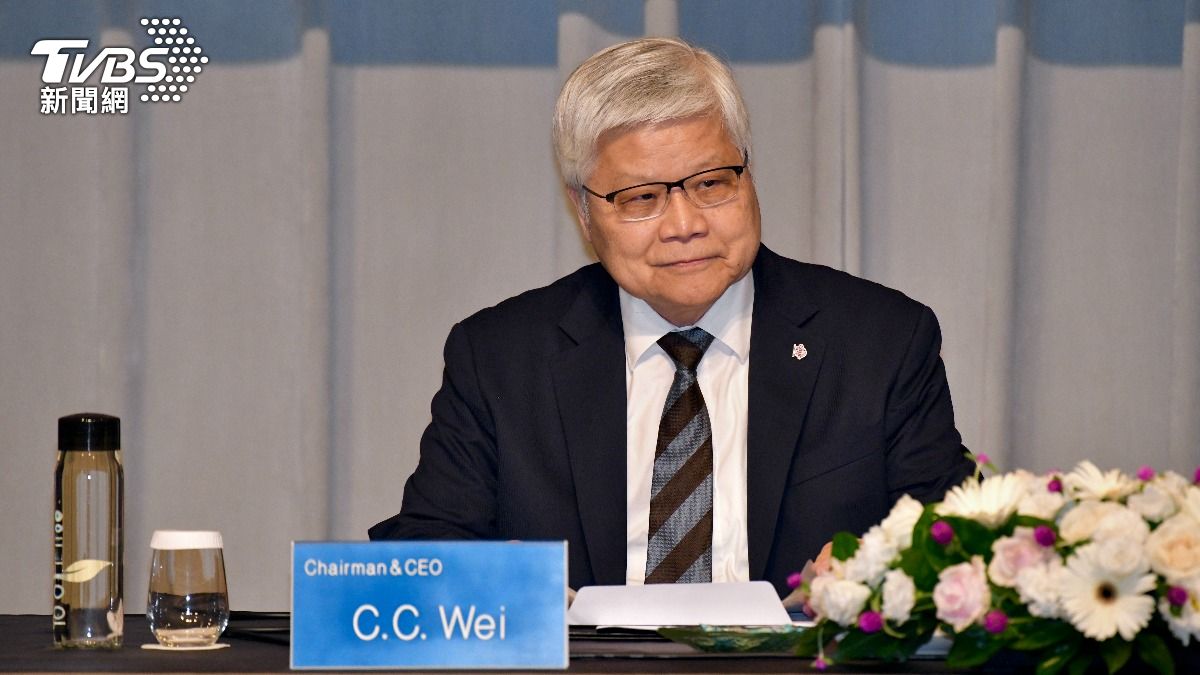
TAIPEI (TVBS News) — Taiwan's semiconductor champion has tightened its grip on the global chip manufacturing landscape. Taiwan Semiconductor Manufacturing Company (TSMC, 台積電), the world's largest contract chipmaker, has captured an unprecedented 35% share of the global semiconductor foundry market in the first quarter of 2025, according to a comprehensive industry analysis released Tuesday (June 24) by Counterpoint Research. The milestone underscores the company's widening technological lead over competitors amid surging demand for advanced chips. Analysts attribute this dominant position partly to TSMC's strategic "Foundry 2.0" business model unveiled in July 2024, which has fundamentally reshaped industry dynamics by integrating sophisticated chip processing with advanced packaging technologies previously handled by separate companies.
The semiconductor manufacturing sector continues its remarkable expansion trajectory, according to Counterpoint's detailed market analysis. Global wafer foundry revenues reached US$72 billion (approximately NT$2.12 trillion) during the January-March period, representing a substantial 13% increase compared to the same quarter last year. This double-digit growth has been primarily fueled by insatiable market demand for artificial intelligence processors and high-performance computing chips that power data centers worldwide. The report also highlighted positive spillover effects in the specialized outsourced semiconductor assembly and test (OSAT) segment, which registered a 7% year-over-year revenue increase. Major packaging and testing companies — including Taiwan's ASE Technology Holding Co., Ltd (日月光) and Siliconware Precision Industries (SPL, 矽品), alongside U.S.-based Amkor — have directly benefited from TSMC's expanding requirements for sophisticated packaging solutions tailored to complex AI processor designs.
Industry experts pointed to TSMC's relentless technological advancement as the cornerstone of its market dominance. Brady Wang, associate director at Counterpoint Research, attributed the chipmaker's record-setting 35% market share and impressive 30%-plus revenue growth to its aggressive expansion in cutting-edge processing technologies that competitors struggle to match. The analysis also noted unexpected strength in the specialized photomask segment, a critical component in semiconductor manufacturing that has seen renewed importance with the development of next-generation 2-nanometer fabrication processes and increasingly intricate AI chip and chiplet architectures. William Li, research analyst at Counterpoint, identified artificial intelligence as the semiconductor industry's primary growth catalyst, noting how AI requirements are fundamentally reorganizing manufacturing priorities throughout the entire wafer foundry supply chain.
The semiconductor manufacturing landscape is undergoing a fundamental transformation that extends beyond TSMC's individual success, according to the research firm's strategic outlook. The industry-wide transition toward what analysts have termed the "Foundry 2.0" paradigm represents a significant departure from traditional manufacturing models, with previously distinct segments of the semiconductor value chain becoming increasingly consolidated into cohesive, integrated systems. This structural evolution, pioneered by TSMC but gradually adopted by competitors, is anticipated to catalyze an unprecedented wave of semiconductor innovation. Industry experts predict these changes will accelerate technological breakthroughs across multiple computing domains, from mobile devices to data centers and specialized AI hardware. ◼