









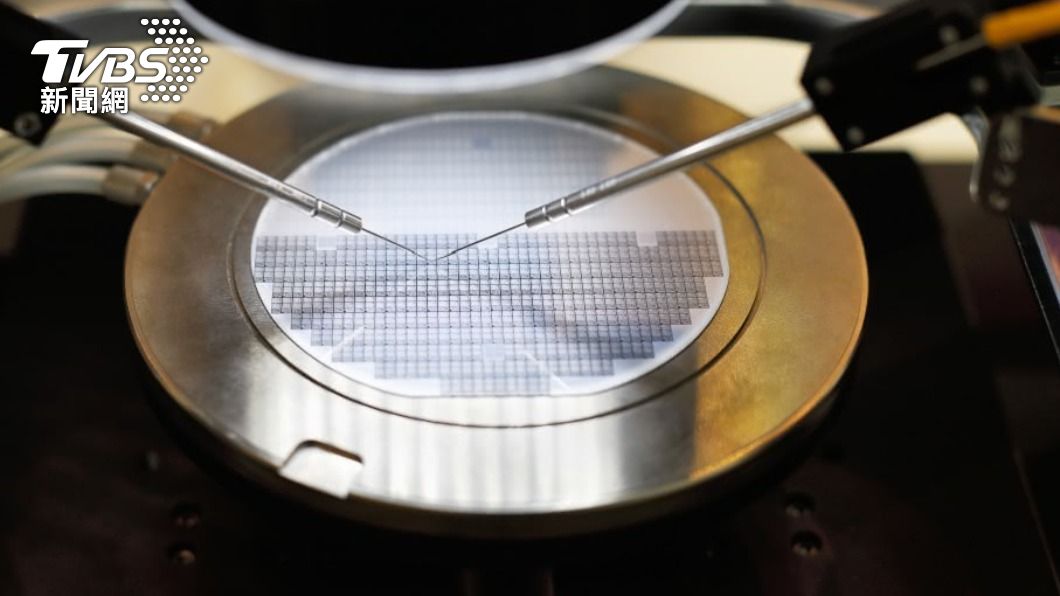
TAIPEI (TVBS News) — A semiconductor industry veteran and current director at Hon Hai Group (Foxconn, 鴻海), Taiwan's largest electronics manufacturer and a key Apple supplier, offered a vote of confidence in Taiwan's crown jewel of technology on Wednesday (June 18). Chiang Shang-yi (蔣尚義), speaking at the "Taiwan Future International Forum" (台灣大未來國際高峰會) organized by business publication Business Today (今周刊), predicted that Taiwan Semiconductor Manufacturing Company (TSMC, 台積電), the world's leading chip manufacturer supplying advanced processors to Apple, NVIDIA, and other tech giants, would maintain its dominant market position for at least the next decade. Chiang identified two pillars supporting this outlook: TSMC's unmatched technical leadership in advanced manufacturing processes and its consistent year-over-year improvements in production yields.
In his address to the forum attendees, which included industry executives, government officials, and international investors, Chiang emphasized TSMC's forward-looking strategic pivot toward what industry insiders call "system foundry" capabilities — an evolution of chip manufacturing that integrates more complex systems onto silicon — as a critical approach to addressing the looming challenges facing the semiconductor industry as Moore's Law, the principle that chip performance doubles roughly every two years, approaches its physical limits. The industry veteran, who has held leadership positions at multiple major semiconductor companies throughout his career, praised TSMC's exceptional performance in both production efficiency and research and development yields, metrics that directly impact profitability and technological advancement in the highly competitive chip manufacturing landscape.
Drawing on his personal history with the semiconductor giant, Chiang offered forum attendees a compelling narrative of TSMC's remarkable ascent in the global semiconductor hierarchy since the turn of the millennium, attributing the company's meteoric rise to its relentless pursuit of technological excellence and manufacturing refinements. With the perspective of an industry insider, Chiang shared his firsthand experience joining TSMC in 1997 during its formative years when the company trailed competitors by a substantial 2.5 technology generations — a significant disadvantage in an industry where even minor technological gaps can determine market leadership. He highlighted TSMC's extraordinary financial performance, specifically its consistent ability to maintain net profit margins of 30% to 40% — figures that far exceed typical manufacturing industry standards — which he attributed to two key factors: the company's unwavering commitment to technological leadership and the foundational vision established by TSMC's legendary founder Morris Chang (張忠謀), who instilled a corporate culture centered on technological excellence rather than merely following competitors.
In his detailed analysis of TSMC's competitive position, Chiang emphasized that the company's success stems not merely from temporary technological advantages but from its sustained ability to improve manufacturing yields — the percentage of functioning chips produced on each silicon wafer — year after year, creating a cumulative advantage that competitors struggle to overcome. Despite his overall optimistic outlook, the semiconductor veteran acknowledged significant long-term challenges facing TSMC, particularly as the physics-based limitations of Moore's Law become increasingly constraining, potentially narrowing the technological gap between TSMC and its competitors in coming decades. As a strategic imperative for maintaining TSMC's market dominance, Chiang advocated for aggressive expansion into the emerging field of system architecture foundry services, where chip manufacturers take on more comprehensive design responsibilities and integrate multiple functions into specialized chip packages tailored for specific applications like artificial intelligence or autonomous vehicles.