









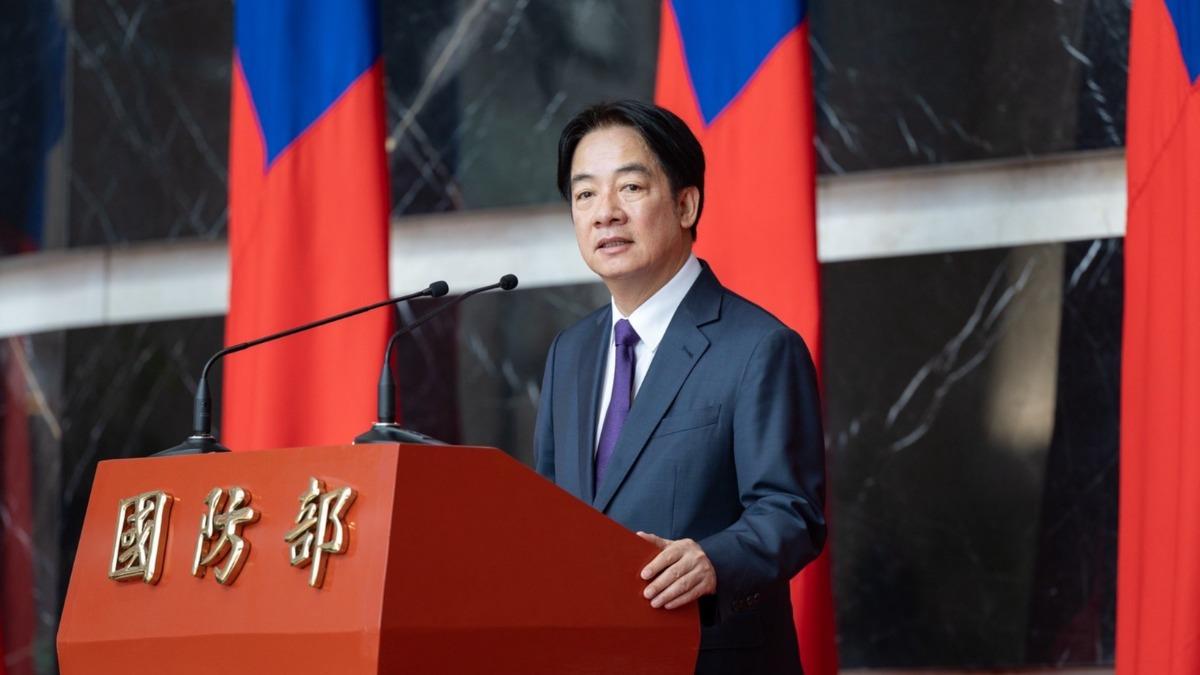
TAIPEI (TVBS News) — Taiwan's president welcomed rare explicit international backing from the world's wealthiest democracies on Wednesday (June 18), as President Lai Ching-te (賴清德), who took office just last month amid heightened cross-strait tensions, publicly thanked G-7 leaders for their support of peace in the strategically vital Taiwan Strait and their unprecedented criticism of Beijing's increasingly assertive military posture toward the self-governed island. In a carefully worded message posted to his official account on X, the social media platform formerly known as Twitter, President Lai emphasized Taiwan's steadfast commitment to working alongside democratic partners to resist political intimidation while simultaneously strengthening economic relationships with like-minded countries, a dual approach that has characterized Taiwan's foreign policy as it navigates complex geopolitical pressures from China, which claims the island as its territory.
The communiqué issued by leaders of the Group of Seven — comprising the United States, Japan, Germany, United Kingdom, France, Italy, and Canada — maintained the delicate diplomatic balance that has characterized international Taiwan policy for decades, reaffirming the bloc's adherence to respective one-China policies while simultaneously expressing growing alarm over Beijing's military activities in contested maritime zones throughout East Asia. The comprehensive summary document, which the G-7 released on June 17 following intense negotiations among member states, placed particular emphasis on preserving stability across the 110-mile-wide Taiwan Strait, the narrow body of water separating Taiwan from mainland China that has become one of the world's most dangerous potential flashpoints and a critical shipping lane for global commerce worth an estimated $3 trillion annually.
Beyond security concerns, the G-7 leaders expanded their critique to include economic issues, calling on Beijing to address industrial policies that create market imbalances through state subsidies and production overcapacity, particularly in emerging sectors like electric vehicles and renewable energy technologies that have become points of trade friction with Western economies. The unusually direct language in the communiqué prompted a swift and forceful rebuke from Beijing, with Ministry of Foreign Affairs spokesperson Guo Jia-kun (郭嘉昆) delivering a sharply worded condemnation that accused the world's advanced industrial democracies of "manipulating" China-related issues to advance their own interests, while characterizing discussions of Taiwan as an unacceptable intrusion into what China considers its domestic affairs. Chinese diplomatic representatives have formally registered official protests through diplomatic channels regarding both the economic criticisms and the Taiwan-related language in the G-7 statement. ◼