









TAIPEI (TVBS News) — Taiwan's semiconductor prowess should not be viewed as an impenetrable defense against geopolitical threats, according to a prominent voice from within the industry's flagship institution. Taiwan Semiconductor Manufacturing Company's (TSMC, 台積電) Education & Culture Foundation (台積電文教基金會) board member issued a sobering assessment Wednesday (April 9), calling on the Taiwanese public to reconsider their faith in the so-called "silicon shield" — the widely held belief that the island's semiconductor dominance provides strategic protection by making Taiwan too valuable for conflict. The foundation representative emphasized that semiconductors alone cannot be relied upon as a permanent or exclusive guarantor of national security in an increasingly complex global landscape.
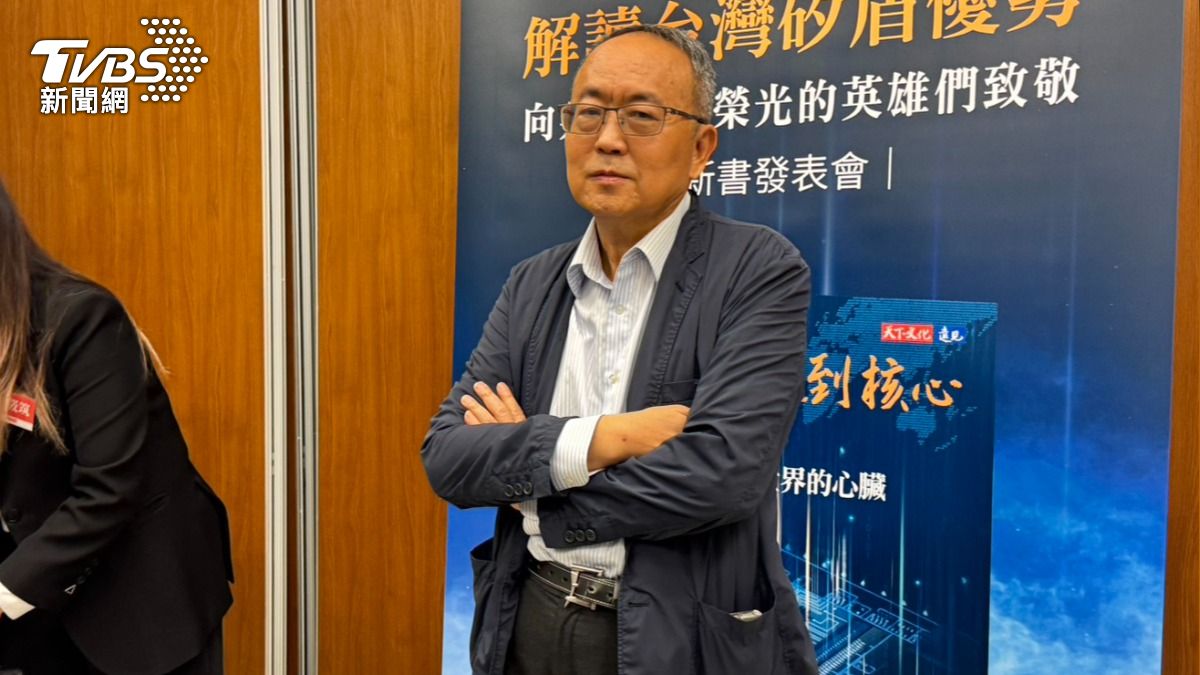
Foundation board member Chen Chien-pang (陳健邦) delivered these cautionary remarks at a high-profile event in Taipei marking the launch of the book "From Edge to Core" (從邊緣到核心), a new publication examining Taiwan's strategic position in the global technology ecosystem. During his address, Chen offered a nuanced analysis of both the present reality and future trajectory of the silicon shield concept that has become central to discussions about Taiwan's geopolitical security strategy in recent years.
Chen acknowledged the critical importance of the semiconductor industry to Taiwan's economy and global standing but warned against overconfidence in its protective power. He drew a sobering parallel to Ukraine's situation as evidence that strategic economic importance does not necessarily deter conflict. The timing of Chen's comments carried additional weight, coming against a backdrop of significant market volatility affecting Taiwan's flagship technology company. TSMC's stock had experienced a precipitous decline, closing at NT$785 (US$23.79) after three consecutive days of losses amid broader market turbulence triggered by international tariff disputes and trade tensions.
Addressing mounting public anxiety regarding TSMC's expanding operations in the United States and the potential transfer of critical technological capabilities away from Taiwan, Chen offered reassurance about the island's enduring competitive advantages. He emphasized that Taiwan's unique ecosystem for semiconductor research and development remains unparalleled globally, pointing to distinctive factors that cannot be easily replicated overseas. The foundation board member specifically highlighted the exceptional dedication demonstrated by Taiwan's engineering talent pool and the deeply collaborative industrial environment that has evolved over decades as irreplaceable assets that continue to give Taiwan a decisive edge in advanced semiconductor innovation.