







Taiwan's Tungs' Taichung MetroHarbor Hospital Expands International Medical Services with One-Stop Care, Becomes a Trusted Choice for Patients Worldwide
TAIPEI (TVBS News) — Upon entering Tungs' Taichung MetroHarbor Hospital (童綜合醫院), visitors are greeted at the service counter by multilingual signage in English, Japanese, Vietnamese, and Indonesian. As globalization advances and Taiwan's industries internationalize, demand for diverse medical services has grown. Located in Taichung near both a major seaport and an international airport, the hospital has leveraged its prime geographic location to actively expand international medical services in recent years.
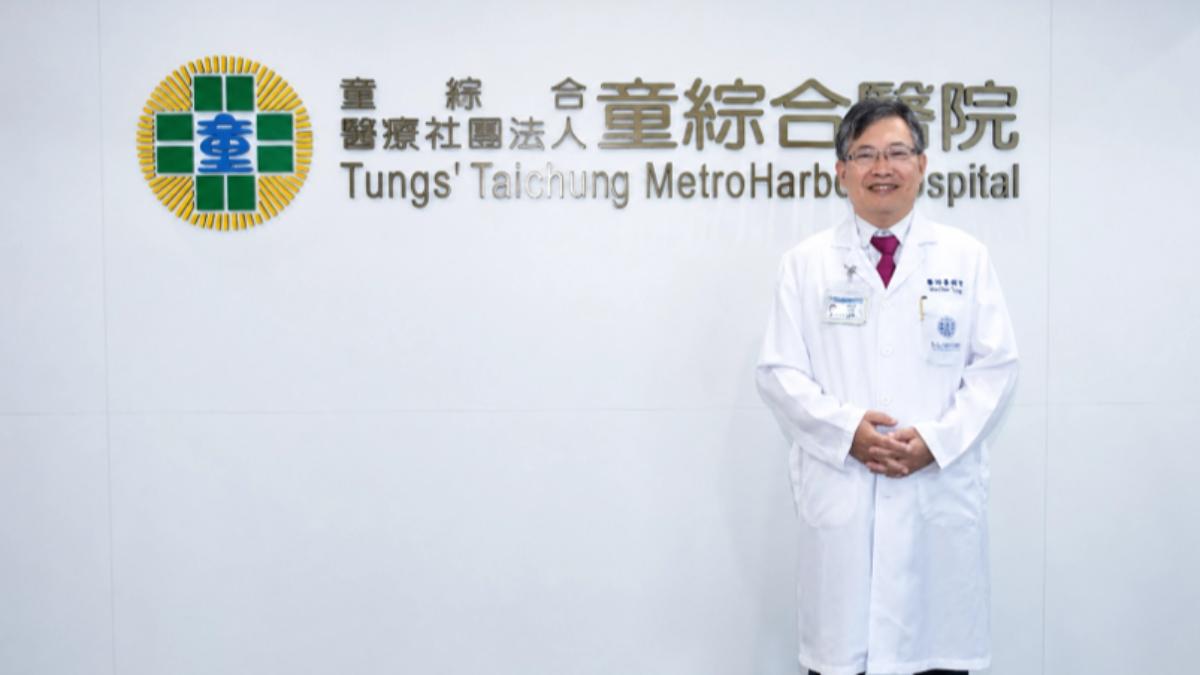
It not only cares for foreign nationals in Taiwan but also combines cutting-edge technology with warm, personalized one-stop services. These efforts showcase Taiwan's healthcare on the international stage. In an interview with TVBS, Hospital Chairman and Chief Superintendent Min-Che Tung (童敏哲) explained how this medical institution has become a trusted choice for patients worldwide.

Eliminating Language Barriers: From Geographic Advantages to One-Stop Service
The hospital's move toward internationalization began with a keen understanding of its geographic advantages. Tung said that in addition to its proximity to Taichung Port (臺中港) and Taichung International Airport (臺中國際機場), the hospital has benefited from the rise of the offshore wind power industry. Large numbers of European engineers have been stationed along Taichung's coastal region in recent years. Combined with the expanding network of Southeast Asian flight routes, demand for medical services from foreign nationals has rapidly increased.
Tung said the hospital has divided its international medical services into two main areas: one serves foreign nationals living locally, and the other accepts patients who travel specifically from overseas to Taiwan for treatment. To this end, the hospital has continuously pursued JCI (Joint Commission International) accreditation since 2008 — a standard recognized by the World Health Organization (WHO) as the most credible international benchmark. The hospital has now achieved this accreditation for the sixth time, demonstrating its firm commitment to maintaining internationally recognized standards of healthcare quality.
To eliminate administrative and communication barriers in cross-border medical care, the hospital has created "one-stop" medical services. Beyond multilingual support, the hospital handles visa processing, airport transfers, hotel accommodations and hospitalization. The facility ensures patients are properly cared for at every step—from arrival in Taiwan to departure — allowing them to focus on recovery rather than navigating complicated procedures.
Digital Technology and Transfer Services Enable Seamless Diagnosis and Treatment
The hospital has also been visionary in developing digital medicine. Tung said the hospital actively uses telemedicine and digital platforms, employing AI-powered technology such as video consultations and wearable devices. These tools enable remote monitoring and treatment for offshore wind power engineers working at sea. This not only improves the convenience of medical services but also gives patients greater peace of mind.
When discussing the ability to handle critical emergencies, Tung admitted it is a major challenge. He said that whether overseas Taiwanese encounter fractures, strokes, or heart attacks, the hospital can leverage its international emergency medical transfer team, FORMOSA SOS, which cooperates with major airlines to safely bring patients back to Taiwan.
This service has an extremely high barrier to entry because it requires expensive medical equipment that meets aviation safety standards, including onboard ECMO machines and ventilators. It also requires good communication and trust with local medical systems. With its expertise and extensive experience, the hospital carries out nearly 100 transfer missions annually — even critically ill patients can be properly managed. For example, the team successfully repatriated a Taiwanese businessman who was shot in the Philippines, demonstrating the hospital's leading position in emergency medical transfers.
Advanced Robotic-Assisted Surgery Attracts Overseas Patients
The hospital's early adoption of advanced medical technology is central to its international competitiveness, particularly in robotic-assisted surgery, where it has accumulated extensive experience. Tung emphasized that this technology combines high-resolution 3D stereoscopic vision with flexible robotic arms, greatly improving surgical precision and safety.
Tung said that for overseas patients, the post-operative recovery period — their primary concern — has been significantly shortened. Robotic-assisted surgery effectively reduces blood loss and decreases post-operative complications, allowing most patients to resume daily activities more quickly, shorten their stay in Taiwan and achieve high-quality treatment outcomes.
A 59-year-old Malaysian man surnamed Chung (鍾) discovered during a health checkup that his prostate-specific antigen (PSA) level had surged to 18.5 and was diagnosed with stage 2 prostate cancer. Facing lengthy surgical scheduling and uncertain waiting times locally, Chung made a decisive decision to travel to Taiwan for treatment. Under the care of the hospital team using robotic-assisted surgery, the operation was successfully completed — Chung was able to get out of bed the day after surgery and walk freely by the second day.
Most patients who seek treatment abroad learn about the hospital through online research, word of mouth or referrals from relatives and friends — indicating that the hospital's professionalism and services have established a strong reputation. These successful cases serve as proof of the hospital's capabilities and have deepened the trust that international patients place in the institution.
Advancing Capabilities Across Departments Drives Medical Capacity and Patient Convenience
Facing competition in the medical industry, many hospitals choose to focus on a single specialty. The hospital, however, has chosen the more challenging approach of advancing multiple departments simultaneously. Discussing the strategy behind this, Tung said the core lies in "looking far ahead and planning early" — providing integrated medical care across departments and sparing patients the trouble of visiting multiple hospitals.
Tung explained that the hospital was one of the earliest facilities in Taiwan to deploy multi-port robotic-assisted surgery and was a pioneer in introducing single-port robotic-assisted surgery when it launched last year. This has enabled robotic-assisted surgery to be widely applied across multiple departments, including gynecology, urology, colorectal surgery, otolaryngology and thoracic surgery.
This strategy is reflected in early investment in equipment and technology, as well as long-term physician training and subspecialty development. Through institutionalized talent cultivation and resource allocation, the hospital has gradually accumulated capabilities across departments, driving overall medical capacity improvement and enhancing patient convenience.
Tung added that the hospital's long-term vision is to continuously strengthen its international-standard medical capabilities. He said Taiwan's healthcare is sufficiently competitive internationally, noting that the hospital has accumulated more than 6,000 robotic-assisted surgery cases — a figure that not only reflects public trust but also demonstrates the hospital's mature medical technology and clinical quality.
As medical technology advances, the hospital has developed da Vinci surgery case observation sites in fields such as urology, gynecology and otolaryngology. Just as Taiwan's semiconductor industry has amazed the world with its top-tier wafer manufacturing processes, the hospital has become a global focus with its precision medicine, attracting many overseas physicians to visit and learn each year.
Located in central Taiwan, the hospital has established international recognition through continuous innovation, including introducing AI robots to improve nursing staff workflows and enhance medical efficiency — demonstrating a forward-thinking approach in medical services and management.
People-Centered, Technology-Led: Building Comprehensive Medical Services for Patients
Continuously introducing new medical technology and cultivating international medical services defines the hospital's development path. Under the leadership of Chief Superintendent Tung, the facility not only leverages its geographic advantages but also focuses on improving service quality and cultivating talent. Looking ahead, the hospital will continue to optimize both its facilities and digital infrastructure, enabling patients to experience more comprehensive medical care. ◼
TAIPEI (TVBS News) — Upon entering Tungs' Taichung MetroHarbor Hospital (童綜合醫院), visitors are greeted at the service counter by multilingual signage in English, Japanese, Vietnamese, and Indonesian. As globalization advances and Taiwan's industries internationalize, demand for diverse medical services has grown. Located in Taichung near both a major seaport and an international airport, the hospital has leveraged its prime geographic location to actively expand international medical services in recent years.
It not only cares for foreign nationals in Taiwan but also combines cutting-edge technology with warm, personalized one-stop services. These efforts showcase Taiwan's healthcare on the international stage. In an interview with TVBS, Hospital Chairman and Chief Superintendent Min-Che Tung (童敏哲) explained how this medical institution has become a trusted choice for patients worldwide.
The hospital's move toward internationalization began with a keen understanding of its geographic advantages. Tung said that in addition to its proximity to Taichung Port (臺中港) and Taichung International Airport (臺中國際機場), the hospital has benefited from the rise of the offshore wind power industry. Large numbers of European engineers have been stationed along Taichung's coastal region in recent years. Combined with the expanding network of Southeast Asian flight routes, demand for medical services from foreign nationals has rapidly increased.
Tung said the hospital has divided its international medical services into two main areas: one serves foreign nationals living locally, and the other accepts patients who travel specifically from overseas to Taiwan for treatment. To this end, the hospital has continuously pursued JCI (Joint Commission International) accreditation since 2008 — a standard recognized by the World Health Organization (WHO) as the most credible international benchmark. The hospital has now achieved this accreditation for the sixth time, demonstrating its firm commitment to maintaining internationally recognized standards of healthcare quality.
To eliminate administrative and communication barriers in cross-border medical care, the hospital has created "one-stop" medical services. Beyond multilingual support, the hospital handles visa processing, airport transfers, hotel accommodations and hospitalization. The facility ensures patients are properly cared for at every step—from arrival in Taiwan to departure — allowing them to focus on recovery rather than navigating complicated procedures.
The hospital has also been visionary in developing digital medicine. Tung said the hospital actively uses telemedicine and digital platforms, employing AI-powered technology such as video consultations and wearable devices. These tools enable remote monitoring and treatment for offshore wind power engineers working at sea. This not only improves the convenience of medical services but also gives patients greater peace of mind.
When discussing the ability to handle critical emergencies, Tung admitted it is a major challenge. He said that whether overseas Taiwanese encounter fractures, strokes, or heart attacks, the hospital can leverage its international emergency medical transfer team, FORMOSA SOS, which cooperates with major airlines to safely bring patients back to Taiwan.
This service has an extremely high barrier to entry because it requires expensive medical equipment that meets aviation safety standards, including onboard ECMO machines and ventilators. It also requires good communication and trust with local medical systems. With its expertise and extensive experience, the hospital carries out nearly 100 transfer missions annually — even critically ill patients can be properly managed. For example, the team successfully repatriated a Taiwanese businessman who was shot in the Philippines, demonstrating the hospital's leading position in emergency medical transfers.
Advanced Robotic-Assisted Surgery Attracts Overseas Patients
Tung said that for overseas patients, the post-operative recovery period — their primary concern — has been significantly shortened. Robotic-assisted surgery effectively reduces blood loss and decreases post-operative complications, allowing most patients to resume daily activities more quickly, shorten their stay in Taiwan and achieve high-quality treatment outcomes.
A 59-year-old Malaysian man surnamed Chung (鍾) discovered during a health checkup that his prostate-specific antigen (PSA) level had surged to 18.5 and was diagnosed with stage 2 prostate cancer. Facing lengthy surgical scheduling and uncertain waiting times locally, Chung made a decisive decision to travel to Taiwan for treatment. Under the care of the hospital team using robotic-assisted surgery, the operation was successfully completed — Chung was able to get out of bed the day after surgery and walk freely by the second day.
Most patients who seek treatment abroad learn about the hospital through online research, word of mouth or referrals from relatives and friends — indicating that the hospital's professionalism and services have established a strong reputation. These successful cases serve as proof of the hospital's capabilities and have deepened the trust that international patients place in the institution.
Advancing Capabilities Across Departments Drives Medical Capacity and Patient Convenience
Facing competition in the medical industry, many hospitals choose to focus on a single specialty. The hospital, however, has chosen the more challenging approach of advancing multiple departments simultaneously. Discussing the strategy behind this, Tung said the core lies in "looking far ahead and planning early" — providing integrated medical care across departments and sparing patients the trouble of visiting multiple hospitals.
Tung explained that the hospital was one of the earliest facilities in Taiwan to deploy multi-port robotic-assisted surgery and was a pioneer in introducing single-port robotic-assisted surgery when it launched last year. This has enabled robotic-assisted surgery to be widely applied across multiple departments, including gynecology, urology, colorectal surgery, otolaryngology and thoracic surgery.
This strategy is reflected in early investment in equipment and technology, as well as long-term physician training and subspecialty development. Through institutionalized talent cultivation and resource allocation, the hospital has gradually accumulated capabilities across departments, driving overall medical capacity improvement and enhancing patient convenience.
Tung added that the hospital's long-term vision is to continuously strengthen its international-standard medical capabilities. He said Taiwan's healthcare is sufficiently competitive internationally, noting that the hospital has accumulated more than 6,000 robotic-assisted surgery cases — a figure that not only reflects public trust but also demonstrates the hospital's mature medical technology and clinical quality.
As medical technology advances, the hospital has developed da Vinci surgery case observation sites in fields such as urology, gynecology and otolaryngology. Just as Taiwan's semiconductor industry has amazed the world with its top-tier wafer manufacturing processes, the hospital has become a global focus with its precision medicine, attracting many overseas physicians to visit and learn each year.
Located in central Taiwan, the hospital has established international recognition through continuous innovation, including introducing AI robots to improve nursing staff workflows and enhance medical efficiency — demonstrating a forward-thinking approach in medical services and management.
People-Centered, Technology-Led: Building Comprehensive Medical Services for Patients
Continuously introducing new medical technology and cultivating international medical services defines the hospital's development path. Under the leadership of Chief Superintendent Tung, the facility not only leverages its geographic advantages but also focuses on improving service quality and cultivating talent. Looking ahead, the hospital will continue to optimize both its facilities and digital infrastructure, enabling patients to experience more comprehensive medical care. ◼