








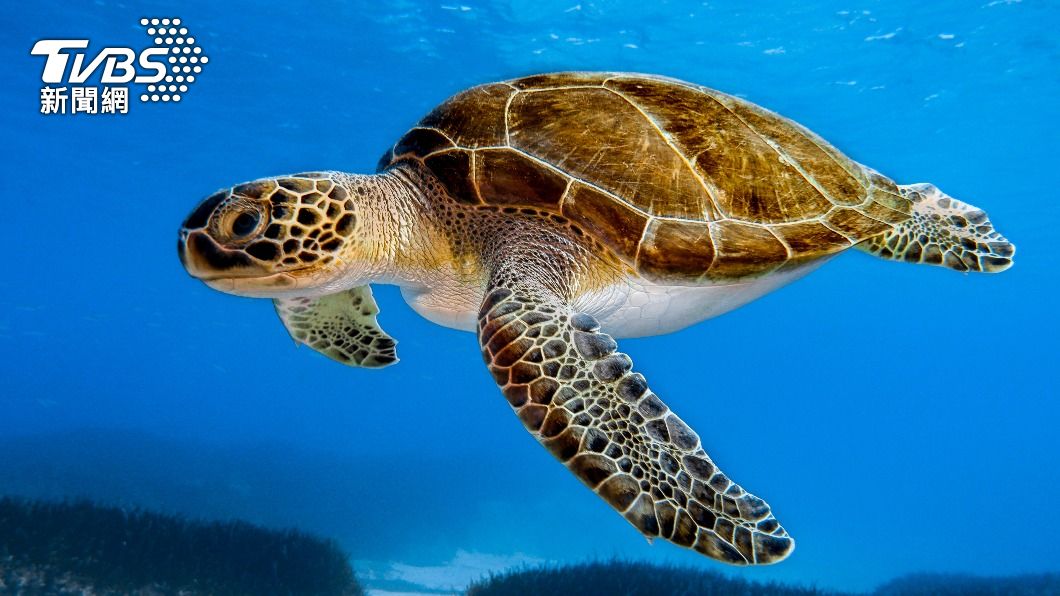
TAIPEI (TVBS News) — Taiwan's sea turtle population has surged to its highest level in three years, with the Ocean Conservation Administration (OCA, 海保署) reporting Thursday (Aug. 21) that 96 mother turtles nested by July. The dramatic increase represents a significant conservation victory for Taiwan's marine protection efforts across multiple island territories. Government marine biologists documented the record-breaking nesting activity through comprehensive monitoring programs that track turtle movements and reproductive success rates throughout Taiwan's coastal waters.
Three mother turtles chose Penghu County's Wang-an Island (望安) for nesting this season, with one remarkable specimen traveling to Dongsha Atoll (東沙) for foraging activities. The turtle's journey underscored Dongsha's abundant seagrass meadows that provide essential nutrition supporting successful reproduction cycles across Taiwan's turtle populations. Taiping Island (太平島) in the South China Sea's Nansha Islands welcomed over 70 nesting mothers from February through July, creating more than 100 nests. Marine researchers deployed sophisticated tagging and monitoring systems to track population dynamics with unprecedented precision.
Taiwan's southern Kenting National Park (墾丁) celebrated successful turtle nesting with hatchlings emerging from Baisha Beach (白砂) and Dawan Beach (大灣). One particularly successful nest achieved an exceptional 90% hatching rate, demonstrating optimal environmental conditions for turtle reproduction in the protected coastal area. The nesting season approaches its conclusion, yet marine biologists anticipate peak hatching activity will continue through the coming weeks as eggs reach maturity.
Ocean Conservation Administration officials stressed the critical importance of reducing human disturbance during the sensitive hatching period to maximize turtle survival rates. The government agency has partnered with National Taiwan Ocean University (NTOU, 國立台灣海洋大學) since 2021 to develop comprehensive habitat protection strategies for turtle nesting sites. These collaborative conservation initiatives have yielded measurable results, producing a notable increase in mother turtle numbers compared to previous year's population counts. ◼