







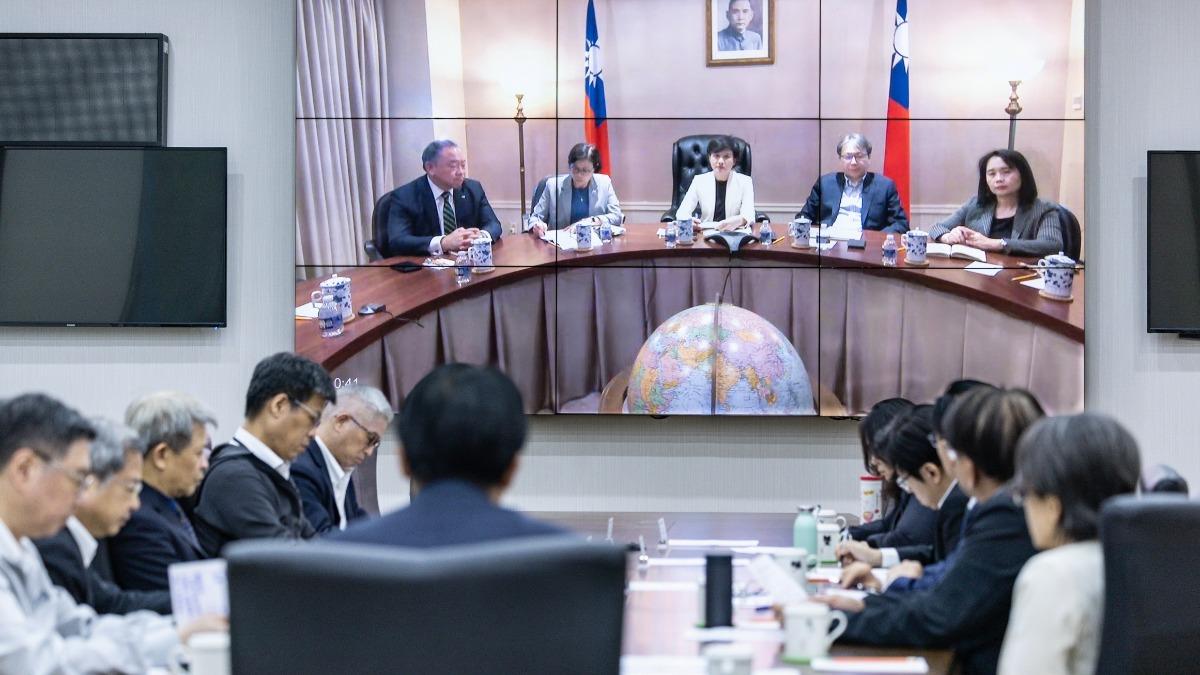
TAIPEI (TVBS News) — Vice Premier Cheng Li-chun (鄭麗君) will travel to Washington, D.C. (華府), this week to seek advantages in crucial tariff negotiations with the United States. Economics Minister J.W. Kuo (郭智輝) confirmed Monday (July 21) that Taipei and Washington have engaged in their fourth round of talks, aiming for better tax rates than competing countries. The high-level diplomatic mission underscores Taiwan's determination to secure favorable trade terms amid escalating global economic tensions that threaten the island's export-dependent economy. Taiwan's government hopes these negotiations will position the island nation competitively against regional rivals in securing preferential access to American markets.
Minister Kuo admitted he lacks clarity on the negotiation details, raising transparency concerns among legislators and industry observers. Taiwan's parliament's Economic Committee (經濟委員會) questioned the government about the tariff issue Monday (July 21), demanding clearer communication strategies. Legislators from the Kuomintang (KMT), Taiwan's main opposition party, criticized the negotiation process for its opacity and questioned the government's communication with industries. They expressed concerns that Taiwanese industries might face tariffs as high as 32%, potentially devastating the island's export-oriented manufacturing sector and threatening thousands of jobs across multiple industries.
The government has set a goal of achieving tariffs below 20%, but the market remains uneasy about securing rates lower than those of Japan and South Korea, Taiwan's key regional competitors. Critics questioned Minister Kuo's lack of clarity on the negotiations and challenged the choice of negotiators for these critical talks. Taiwan's business community continues to express anxiety over the uncertainty, particularly given the island's heavy reliance on exports to the United States for economic growth and stability. The ongoing negotiations represent a crucial test of Taiwan's diplomatic and economic relationships with its most important trading partner. ◼