










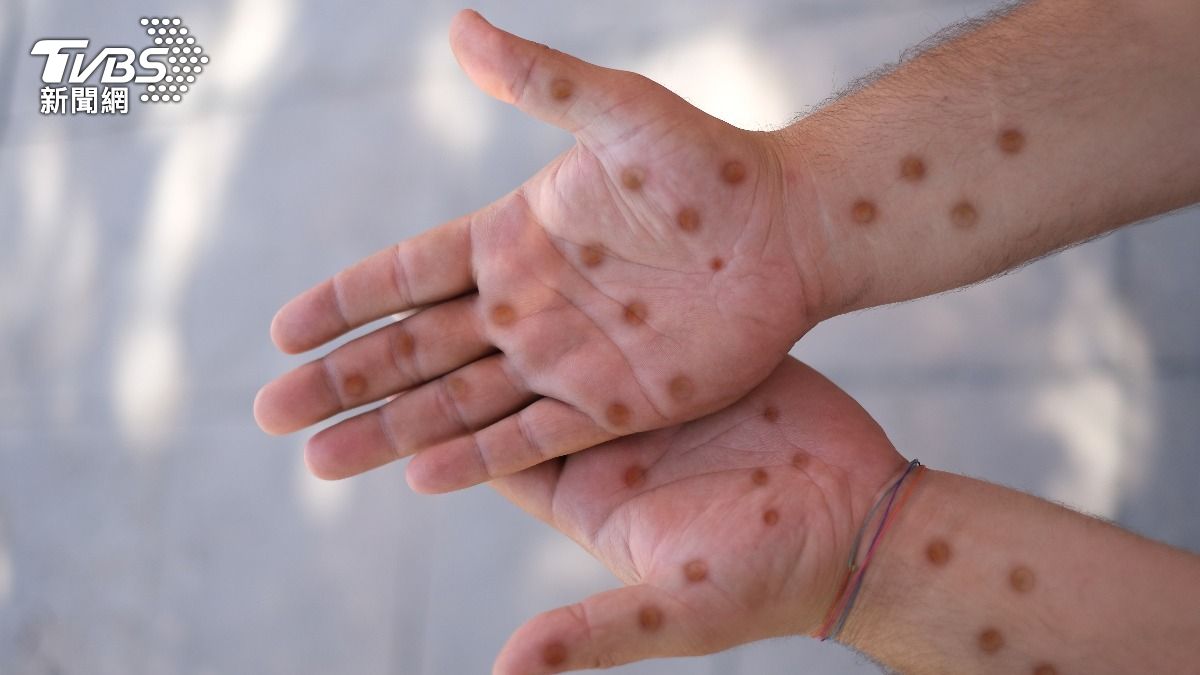
TAIPEI (TVBS News) — Taiwan's Centers for Disease Control (CDC, 疾病管制署), the island's primary public health agency, announced four new mpox infections on Tuesday (July 15), all affecting unvaccinated men in their thirties. Health authorities classified three cases as domestically transmitted, with geographic distribution showing two patients in northern Taiwan and one in the central region. The remaining case was identified as imported from China. All patients have exhibited characteristic symptoms including skin rashes since the beginning of July.
CDC Deputy Director-General Lo Yu-chun (羅一鈞) characterized the infections as isolated incidents rather than part of a larger outbreak. The health official revealed that several patients reported histories of close physical contact with unnamed individuals, emphasizing that potential community spread remains a concern for public health authorities. Laboratory analysis has confirmed all four cases belong to the Clade IIb genetic lineage of the virus, with no evidence of the more virulent Clade I variant that has caused more severe disease in other regions.
Health officials highlighted that mpox transmission typically reaches its seasonal peak during the July-September period, coinciding with heightened international mobility and summer social events that facilitate closer contact between individuals. The agency has issued strong recommendations for vaccination among vulnerable populations. Taiwan's surveillance data shows that since officially designating monkeypox as a Category 2 notifiable disease requiring mandatory reporting on June 23, 2022, authorities have documented 473 confirmed infections, with 441 acquired domestically and 32 brought in from abroad.
Immunization data collected through Sunday reveals that 99,661 individuals have initiated the vaccination process with a single dose, while 68,484 people have fulfilled the complete two-dose protocol recommended for optimal protection. Health authorities note that approximately 31 percent of those who received their first shot have yet to return for the crucial second dose. Public health officials continue to advocate for timely vaccination among eligible groups, particularly targeting those with recent history of high-risk sexual activities or diagnosed sexually transmitted infections within the past twelve months. ◼