










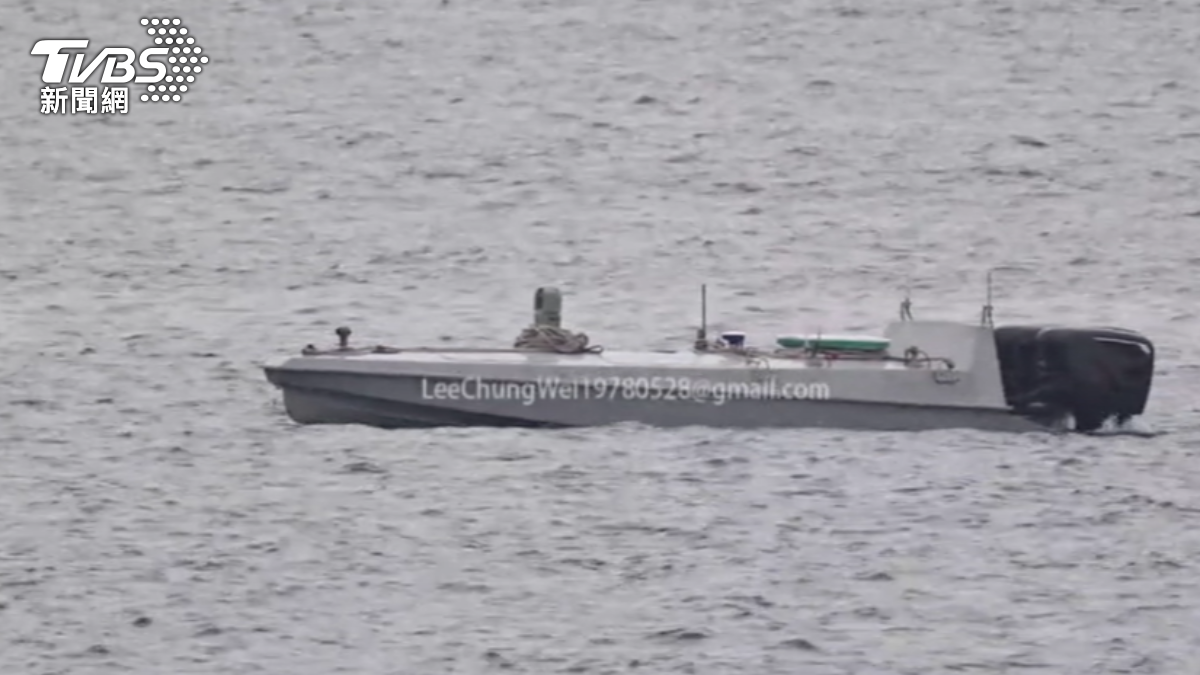
TAIPEI (TVBS News) — Taiwan's defense sector will showcase its growing capabilities in unmanned naval technology next month, the Ministry of National Defense (MND, 國防部) announced on Wednesday (May 28). The National Chung-Shan Institute of Science and Technology (NCSIST, 中山科學研究院), Taiwan's premier military research organization, will host international and domestic manufacturers for demonstrations of surface unmanned vehicles along the northeastern coast of Suao (蘇澳) in Yilan County.
Major General Sun Li-fang (孫立方), a senior spokesperson from the MND's Administration office, will oversee the strategic gathering that includes top brass from Taiwan's Navy Command Headquarters and multiple military branches. According to NCSIST officials, the two-day demonstration serves dual purposes: accelerating Taiwan's unmanned maritime technology development while evaluating the current industrial landscape and practical military applications. Industry specialists from shipbuilding, communications infrastructure, and remote control systems sectors have received invitations to participate.
Defense officials emphasized NCSIST's strategic role in bridging military requirements with civilian technological expertise, presenting the demonstration as tangible evidence of Taiwan's commitment to defense self-sufficiency. The collaborative format allows Taiwan's military planners to evaluate emerging trends in unmanned systems while stimulating domestic innovation. This approach aims to strengthen the island's standing in the increasingly important global market for autonomous maritime vehicles, according to ministry statements.
The comprehensive demonstration will unfold in two distinct formats, according to NCSIST's detailed announcement. Participating companies will first showcase their technologies through static displays featuring models, video presentations, and equipment exhibits at Lungteh Shipbuilding's (龍德造船) Plant No. 6 facility. The program will then transition to live operational demonstrations at the Jiugongli Viewing Platform, where manufacturers will establish shoreline control stations to direct unmanned vessels through real-world missions including surveillance operations and long-distance navigation tests.
Following the demonstrations, NCSIST officials plan to conduct comprehensive assessments of each manufacturer's technological capabilities and readiness levels. These evaluations will directly inform the development of future military procurement specifications and contribute to Taiwan's efforts to establish standardized control systems for its expanding fleet of unmanned maritime vehicles, according to defense research officials. The initiative represents a significant milestone in Taiwan's broader strategy to modernize its naval defense capabilities amid regional security challenges. ◼