










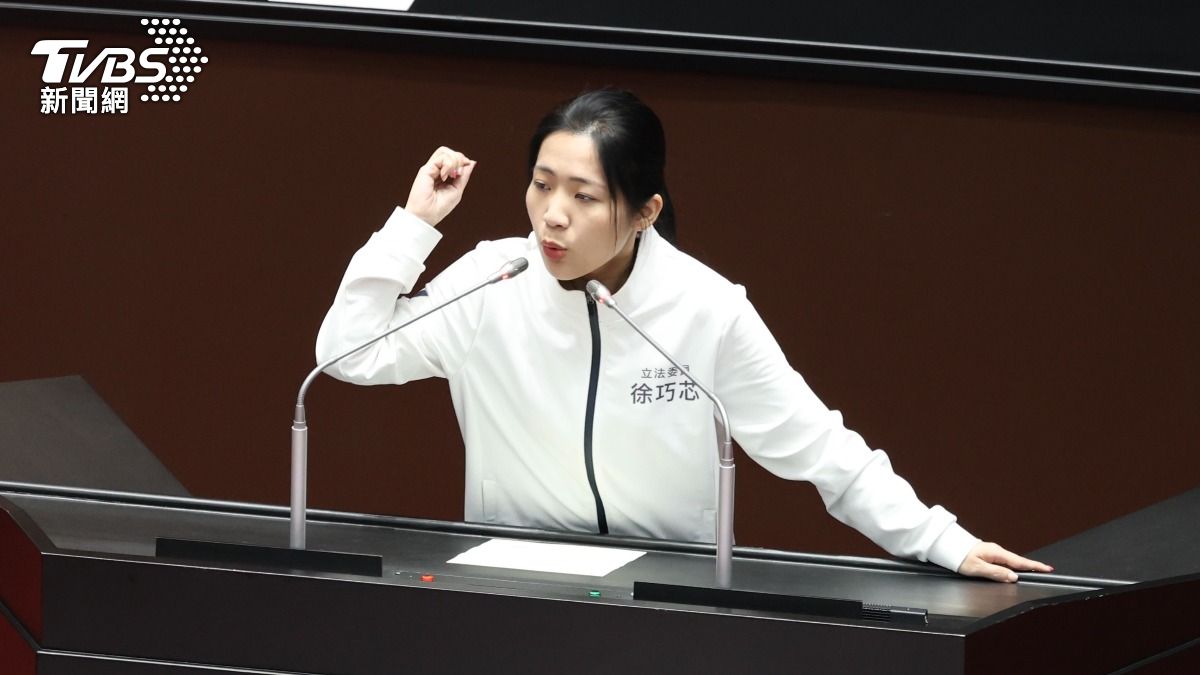
TAIPEI (TVBS News) — The office of Kuomintang (KMT, 國民黨) Legislator Hsu Chiao-hsin (許巧芯) issued a scathing statement Wednesday (April 23) condemning Joseph Wu (吳釗燮), Taiwan's National Security Council (NSC, 國安會) secretary-general, for declining to testify before the Legislative Yuan, Taiwan's parliament. Hsu called for Wu's immediate resignation, citing his connection to two major espionage cases involving senior Democratic Progressive Party (DPP, 民進黨) officials.
In her statement, Hsu emphasized that Ho Jen-chieh (何仁傑), an alleged Chinese intelligence operative, had worked under Wu's supervision for 13 years while maintaining connections to Taiwan's Presidential Office (總統府), the NSC, and the Ministry of Foreign Affairs (MOFA, 外交部). Throughout this period, Wu served in several high-level positions, including Presidential Office secretary-general, foreign affairs minister, and twice as NSC secretary-general — all roles that grant participation in sensitive national security meetings under Taiwan's National Security Council Organization Act (國家安全會議組織法).
Chen Pai-li (陳白立), who heads Taiwan's Ministry of Justice Investigation Bureau (MJIB, 司法部調查局), disclosed Monday that the NSC never reported Ho's suspected espionage activities to proper authorities. According to Chen, Ho received only one standard security screening in 2016. Meanwhile, Wu Shang-yu (吳尚雨), who served as executive secretary to Vice President Lai Ching-te, reportedly never underwent any security clearance process — a revelation that has intensified scrutiny of the ruling DPP government's adherence to national security protocols.
Hsu accused the DPP administration of attempting to divert public attention from these security failures by proposing new national security legislation instead of properly implementing existing protocols. "At this critical moment, the DPP's continued protection of its officials and suppression of opposition is completely unacceptable," the statement from Hsu's office declared, reflecting escalating tensions between Taiwan's major political parties over national security management. ★