









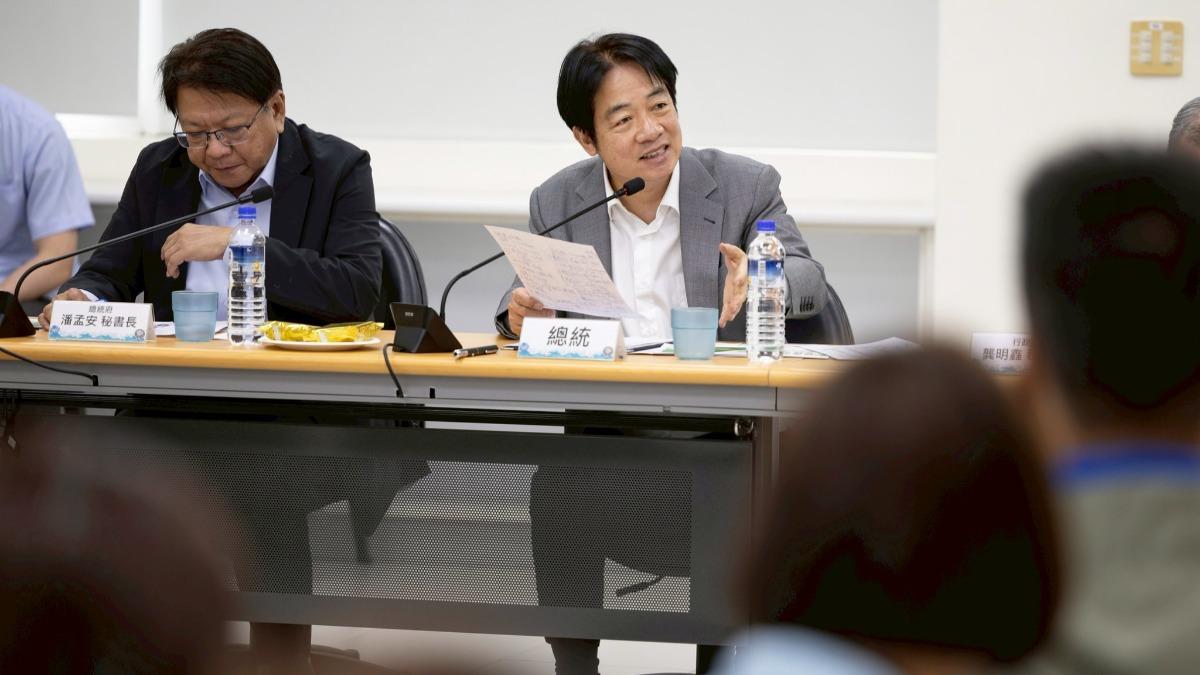
CHIAYI (TVBS News) — Amid escalating trade tensions with the United States, President Lai Ching-te (賴清德) pledged Friday (April 18) that his administration would protect Taiwan's vital agriculture and fishery sectors during upcoming negotiations. Speaking in the southern agricultural hub of Chiayi, Lai emphasized these industries' critical importance, declaring that "agriculture and fisheries are the foundations of our society and must be prioritized."
Addressing local business leaders at an economic forum in Chiayi, President Lai praised the dedication of workers in these traditional sectors while spotlighting recent innovations. He noted that Taiwan's Fisheries Research Institute (水試所), a government-backed marine research center, had achieved a breakthrough in breeding artificial masu salmon. This economically valuable species now joins Taiwan's diverse aquaculture portfolio that includes milkfish, tilapia, bass, and grouper, with the salmon variety particularly prized in European and American markets.
The president reaffirmed his administration's steadfast commitment to supporting Taiwan's agricultural and fishing communities. Calling for national unity in the face of trade challenges, Lai cited Taiwan's impressive pandemic-era economic resilience, when government-backed initiatives helped Taiwanese tilapia producers dramatically increase their U.S. market share from approximately 50-60% to 80%. He framed the current trade tensions as potential catalysts for innovation, urging industry leaders to transform challenges into opportunities for advancement.
Since early April, President Lai has conducted extensive consultations with stakeholders across Taiwan's economic spectrum, including technology companies, traditional industries, and small and medium-sized enterprises (SMEs). On April 6, he delivered a video address to the nation unveiling a comprehensive five-pronged strategy to mitigate the impact of potential reciprocal tariffs threatened by U.S. President Donald Trump. The plan encompasses negotiating tariff reductions, implementing industry support measures, crafting long-term economic strategies, expanding global investments, and maintaining ongoing dialogue with affected sectors.